







The global economy continues to evolve in 2026 as countries balance economic growth, inflation, trade policies, and technological innovation. While some economies are showing steady recovery, others continue to face challenges such as high borrowing costs, geopolitical tensions, and slowing consumer demand.
Governments and central banks are closely monitoring economic indicators to maintain stability while supporting long-term growth.
Global Economic Growth
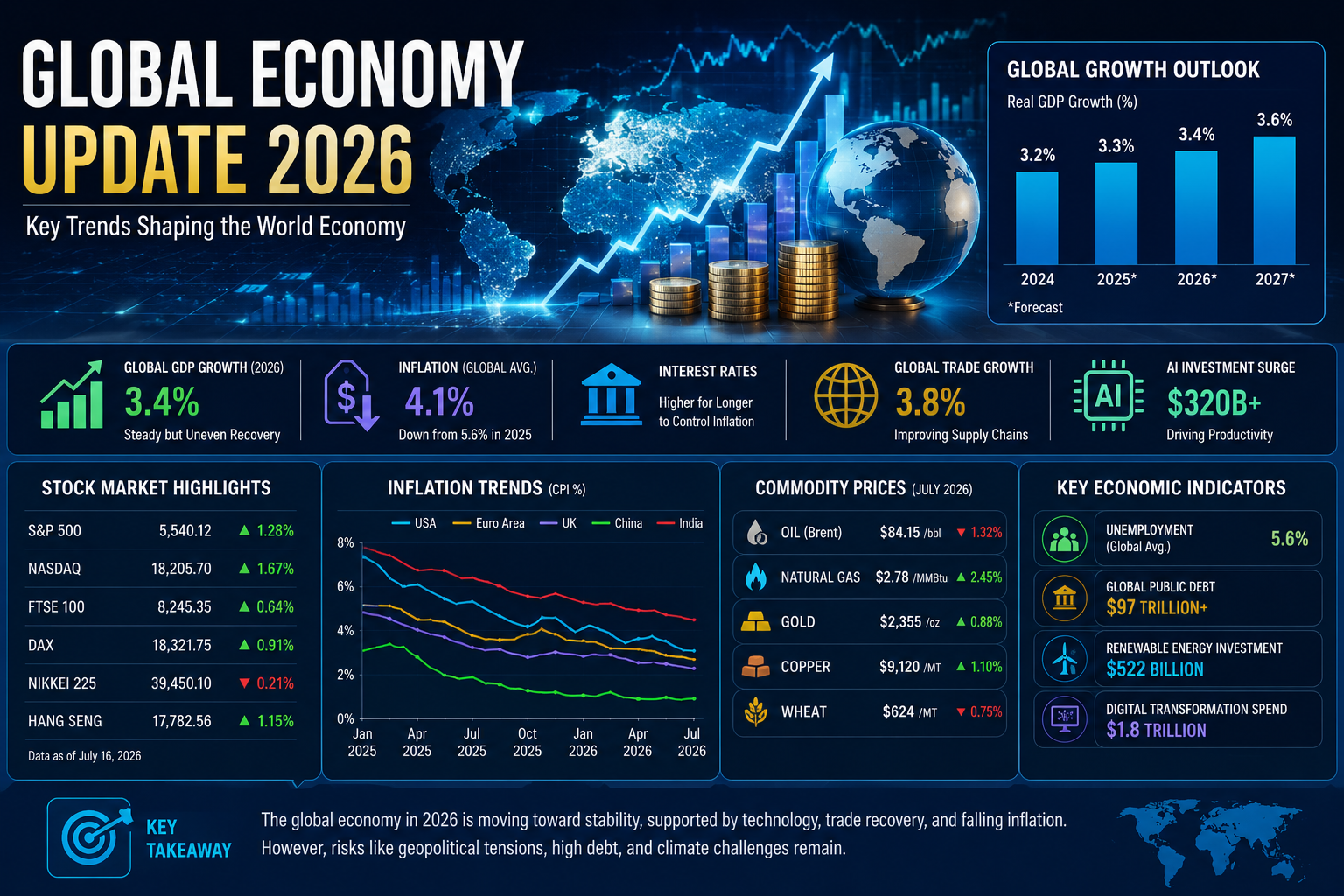
Economic growth remains uneven across different regions.
Several developed economies are experiencing moderate growth as inflation gradually eases. Meanwhile, many emerging markets continue to expand due to rising investments, strong domestic demand, and improvements in digital infrastructure.
International organizations expect global economic growth to remain stable, although uncertainties continue to affect financial markets.
Inflation Continues to Improve
Inflation has declined in many countries compared to previous years, but prices remain higher than before the global inflation surge.
Central banks continue to monitor:
- Food prices
- Energy costs
- Housing expenses
- Wage growth
- Consumer spending
Lower inflation has helped improve consumer confidence, although households are still managing higher living costs.
Interest Rates Remain a Key Focus
Many central banks have kept interest rates at relatively high levels to control inflation.
Higher interest rates affect:
- Home loans
- Business borrowing
- Consumer credit
- Investment decisions
- Economic expansion
Financial markets continue watching future policy decisions that could influence global growth.
Global Trade Outlook
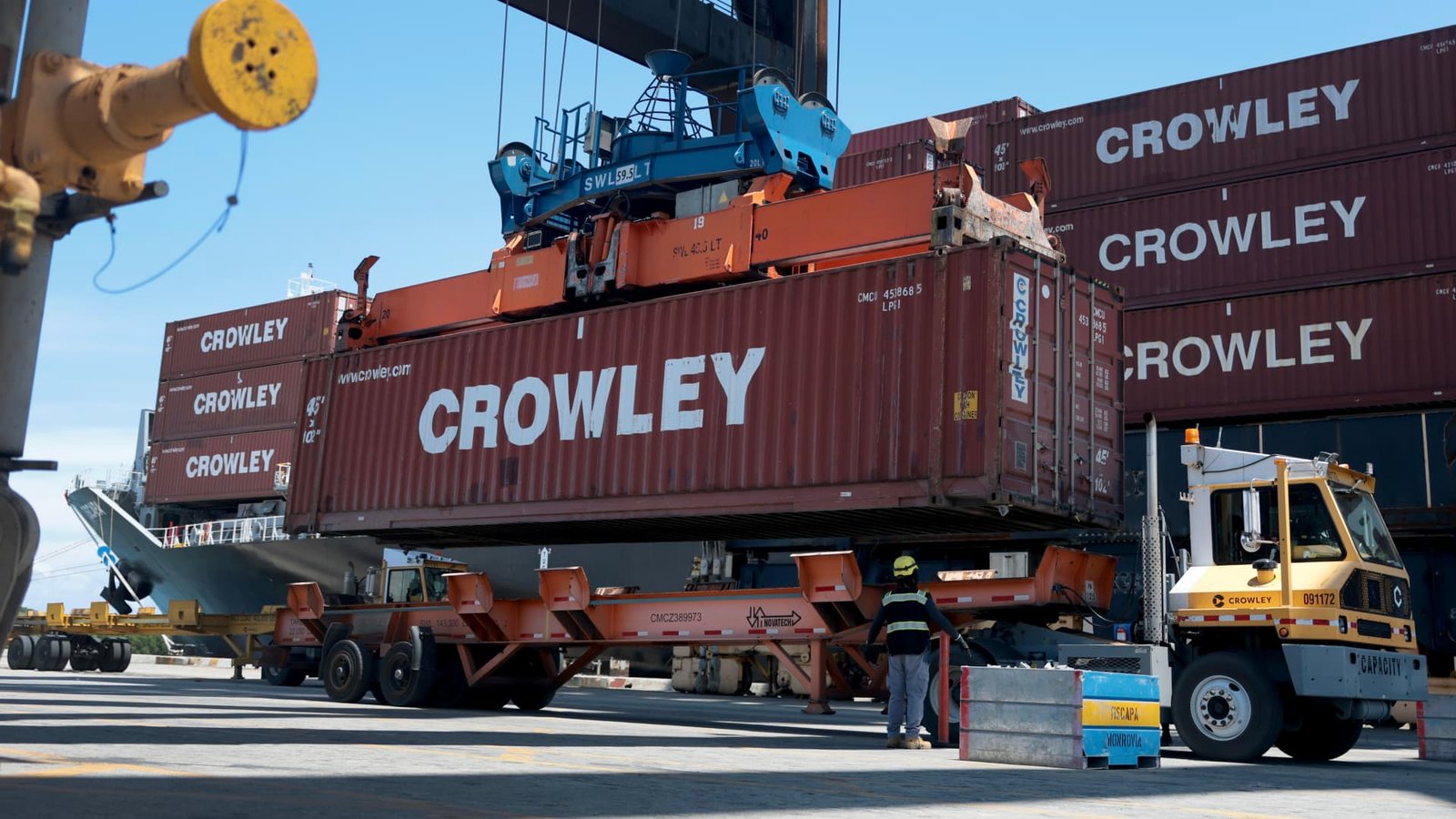
International trade remains an important driver of economic activity.
Trade volumes continue to improve as supply chains become more stable after recent disruptions.
Major industries benefiting from stronger trade include:
- Technology
- Manufacturing
- Renewable energy
- Automotive
- Agriculture
However, geopolitical tensions and changing trade policies still create uncertainty for exporters and importers.
Energy Markets and Commodity Prices
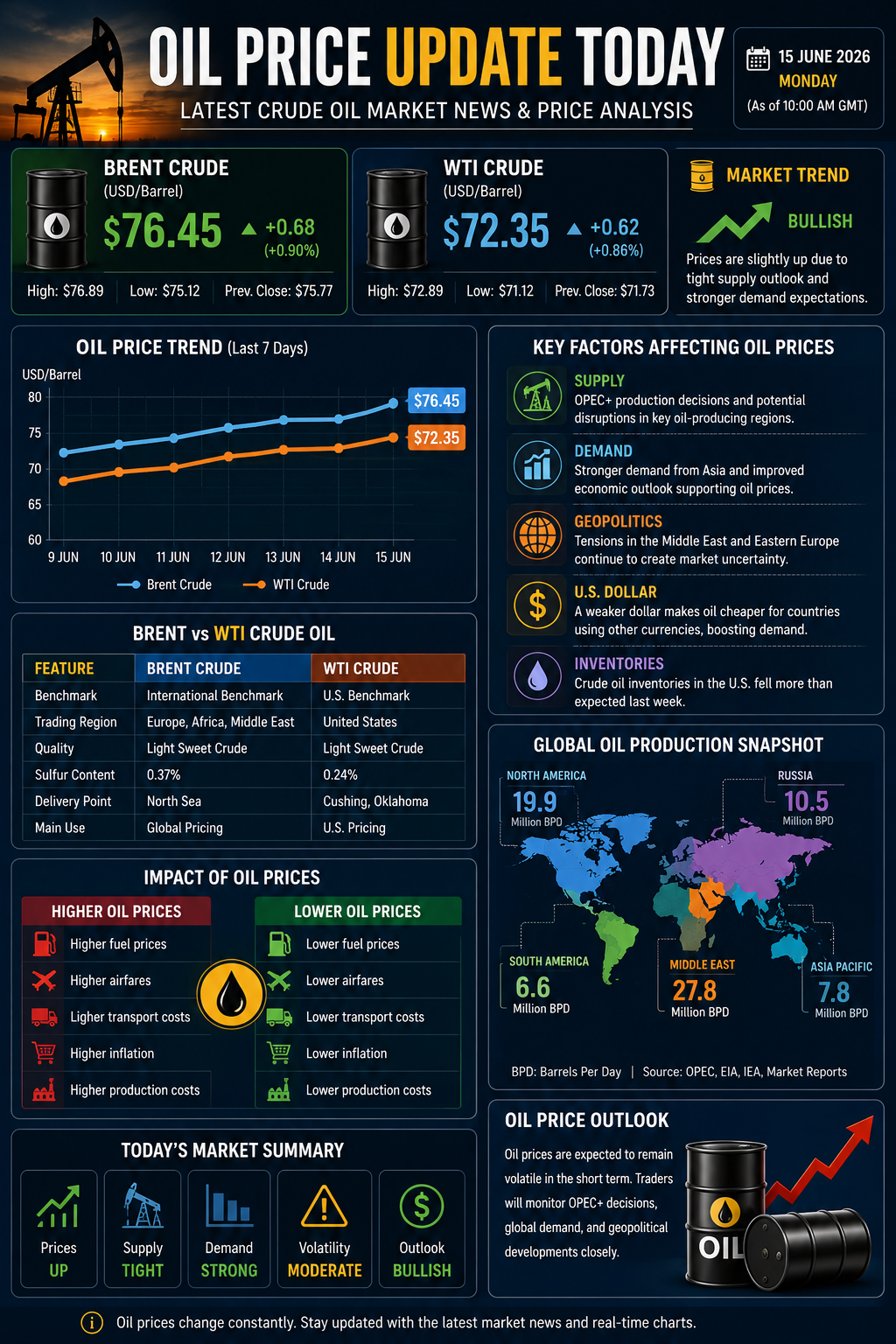
Energy prices remain one of the biggest influences on the world economy.
Oil, natural gas, and electricity prices directly impact transportation, manufacturing, and household expenses.
Commodity markets continue responding to:
- Global demand
- Production levels
- Weather conditions
- International conflicts
- Supply chain developments
Renewable energy investment continues to increase worldwide.
Artificial Intelligence Boosts Productivity
Artificial Intelligence (AI) has become one of the strongest drivers of economic transformation in 2026.
Businesses across multiple industries are investing in AI technologies to improve:
- Customer service
- Manufacturing efficiency
- Healthcare
- Banking
- Education
- Software development
Experts believe AI will contribute significantly to long-term global productivity growth.
Stock Markets Show Mixed Performance
Global stock markets continue reacting to:
- Inflation data
- Corporate earnings
- Interest rate expectations
- Economic reports
- Technology sector performance
Technology companies remain among the strongest performers, while some traditional industries face slower growth.
Risks Facing the Global Economy
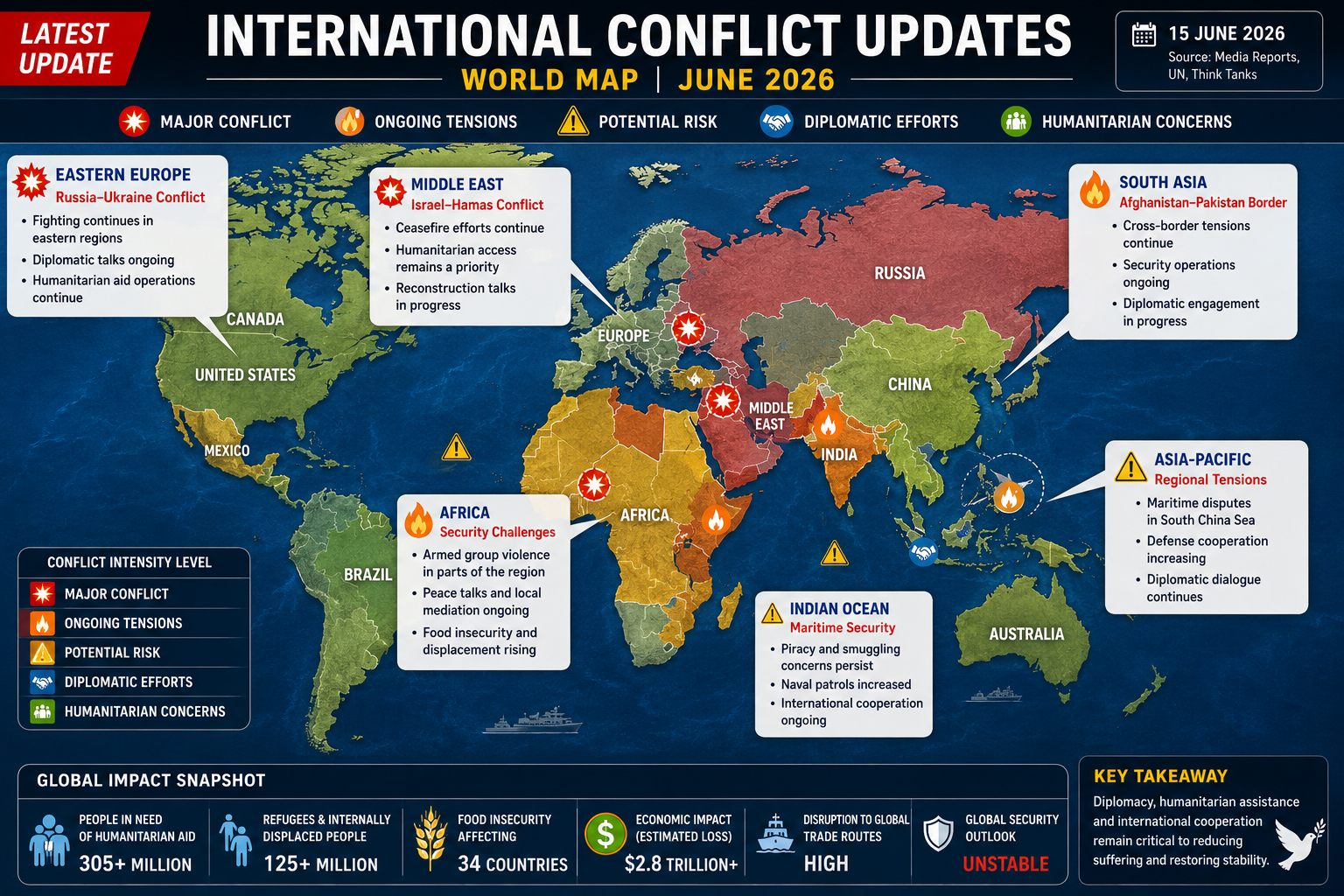
Several challenges continue to affect the global outlook.
1. Geopolitical Tensions
International conflicts continue creating uncertainty for global markets.
2. High Government Debt
Many countries face rising debt levels that may limit future spending.
3. Climate Change
Extreme weather events continue affecting agriculture, insurance, and infrastructure.
4. Supply Chain Risks
Although improving, global supply chains remain vulnerable to disruptions.
5. Inflation Uncertainty
Unexpected increases in energy or food prices could slow economic progress.
Economic Opportunities
Despite challenges, several sectors continue attracting investment.
- Artificial Intelligence
- Renewable Energy
- Electric Vehicles
- Cloud Computing
- Cybersecurity
- Healthcare Technology
- Financial Technology (FinTech)
These industries are expected to play an important role in future economic growth.
Outlook for the Rest of 2026
Economists expect moderate global growth during the remainder of 2026.
Key trends to watch include:
- Inflation movements
- Central bank interest rate decisions
- Global trade activity
- Oil price changes
- AI investment
- Consumer spending
- Employment growth
Countries that successfully balance inflation control with economic expansion are expected to perform better over the coming months.
Conclusion
The world economy in 2026 remains resilient despite ongoing challenges. Inflation is gradually easing, global trade is recovering, and technological innovation—especially artificial intelligence—is creating new opportunities for businesses and investors. While risks such as geopolitical tensions and high interest rates remain, the overall outlook suggests cautious optimism for sustainable global growth.