









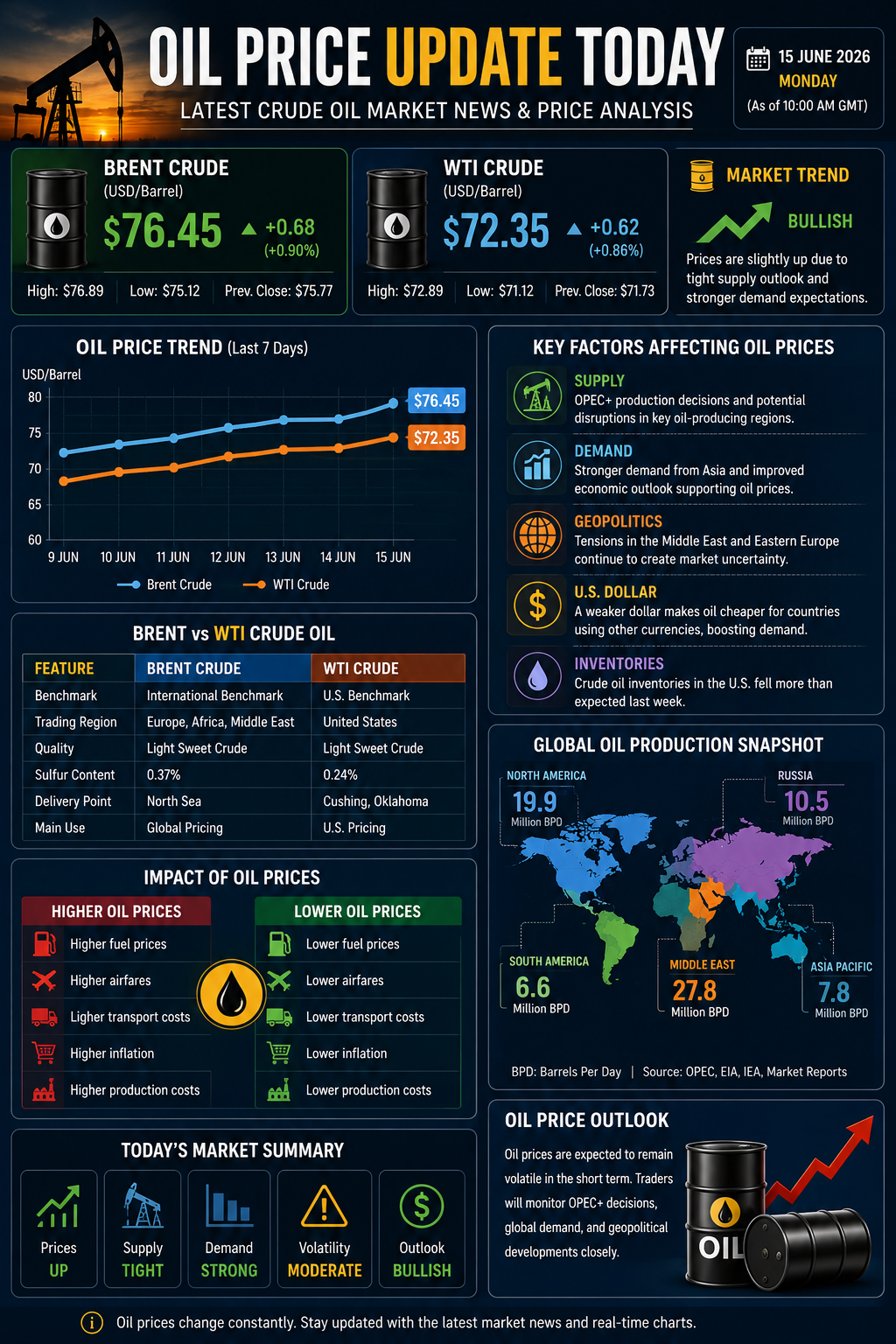
Oil prices remain one of the most closely watched indicators in the global economy. Changes in crude oil prices affect fuel costs, transportation, inflation, manufacturing, and financial markets worldwide. Investors, businesses, and consumers all monitor daily oil price movements to understand the direction of the global energy market.
In today’s oil price update, we examine the latest market trends, key price drivers, and what analysts expect in the coming weeks.
Current Oil Market Overview
The global crude oil market continues to react to several economic and geopolitical developments. Brent Crude and West Texas Intermediate (WTI) remain the two primary benchmarks used to measure oil prices worldwide.
Key Market Highlights
- Brent Crude remains the global pricing benchmark.
- WTI Crude reflects oil prices in the United States.
- Market volatility continues due to supply and demand changes.
- Investors are closely monitoring global economic growth.
Factors Affecting Oil Prices Today
1. Global Supply
Oil-producing countries continue adjusting production levels to balance market demand. Any unexpected production changes can influence global prices.
2. Demand Growth
Demand for crude oil is influenced by:
- Economic growth
- Industrial production
- Air travel
- Transportation
- Seasonal fuel consumption
Higher demand generally supports stronger oil prices.
3. Geopolitical Developments
International tensions in oil-producing regions may create uncertainty in energy markets. Traders monitor geopolitical events because they can affect supply chains and shipping routes.
4. Currency Movements
Since crude oil is primarily traded in U.S. dollars, changes in the value of the dollar often affect oil prices globally.
5. Weather Conditions
Extreme weather, hurricanes, and natural disasters may temporarily disrupt production or refinery operations.
Brent vs WTI Crude Oil
| Feature | Brent Crude | WTI Crude |
|---|---|---|
| Main Region | Europe & Global | United States |
| Benchmark | International | North America |
| Trading Currency | US Dollar | US Dollar |
| Market Use | Global Oil Pricing | US Oil Pricing |
Impact of Oil Prices on Consumers
Oil prices directly influence everyday expenses.
Higher Oil Prices Can Lead To:
- Increased petrol and diesel prices
- Higher airline ticket costs
- More expensive shipping and logistics
- Rising inflation
- Increased manufacturing costs
Lower Oil Prices Can Result In:
- Lower fuel prices
- Reduced transportation expenses
- Lower inflationary pressure
- Improved consumer spending
Impact on Financial Markets
Oil price movements can influence:
- Stock markets
- Energy company shares
- Airline stocks
- Transportation companies
- Commodity markets
- Currency markets
Investors often consider oil prices when evaluating economic conditions.
What Analysts Are Watching
Market analysts continue monitoring:
- Global economic growth
- Oil production levels
- Energy demand
- Inflation trends
- Central bank policies
- International trade developments
These factors may shape crude oil prices throughout the coming months.
Energy Outlook
Many experts expect energy markets to remain sensitive to:
- Economic recovery
- Renewable energy investments
- Electric vehicle adoption
- Industrial demand
- Global supply management
While renewable energy continues expanding, crude oil remains an essential source of energy for transportation and industry.
Tips for Investors
Before making investment decisions:
- Follow reliable financial news sources.
- Monitor oil market fundamentals.
- Diversify investments.
- Consider long-term market trends.
- Stay informed about global economic developments.
This article is for informational purposes only and should not be considered financial or investment advice.
Frequently Asked Questions (FAQs)
What determines oil prices?
Oil prices are mainly influenced by supply, demand, geopolitical events, currency movements, and global economic conditions.
What is Brent Crude?
Brent Crude is the international benchmark used to price much of the world’s oil.
What is WTI Crude?
West Texas Intermediate (WTI) is the primary crude oil benchmark for the United States.
Why do oil prices change every day?
Prices fluctuate because of changes in supply, demand, economic data, weather events, and geopolitical developments.
Conclusion
Oil prices remain a critical indicator of global economic health. Daily changes in Brent and WTI crude prices reflect shifts in supply, demand, and market sentiment. Staying informed about oil market trends can help businesses, investors, and consumers better understand the broader economic outlook.