








NEWYou can now listen to Fox News articles!
I love college sports.
As a former college athlete, coach, broadcaster and someone who has spent a lifetime around tennis, I’ve seen firsthand how college athletics can transform lives. For generations, American universities have offered young people a remarkable bargain: earn an education, compete at a high level and develop the skills needed to succeed long after the games are over.
That model has served America extraordinarily well.
Today, however, it is worth asking a difficult question:
RILEY GAINES: COLLEGE SPORTS IS BROKEN – HERE’S HOW TO FIX IT
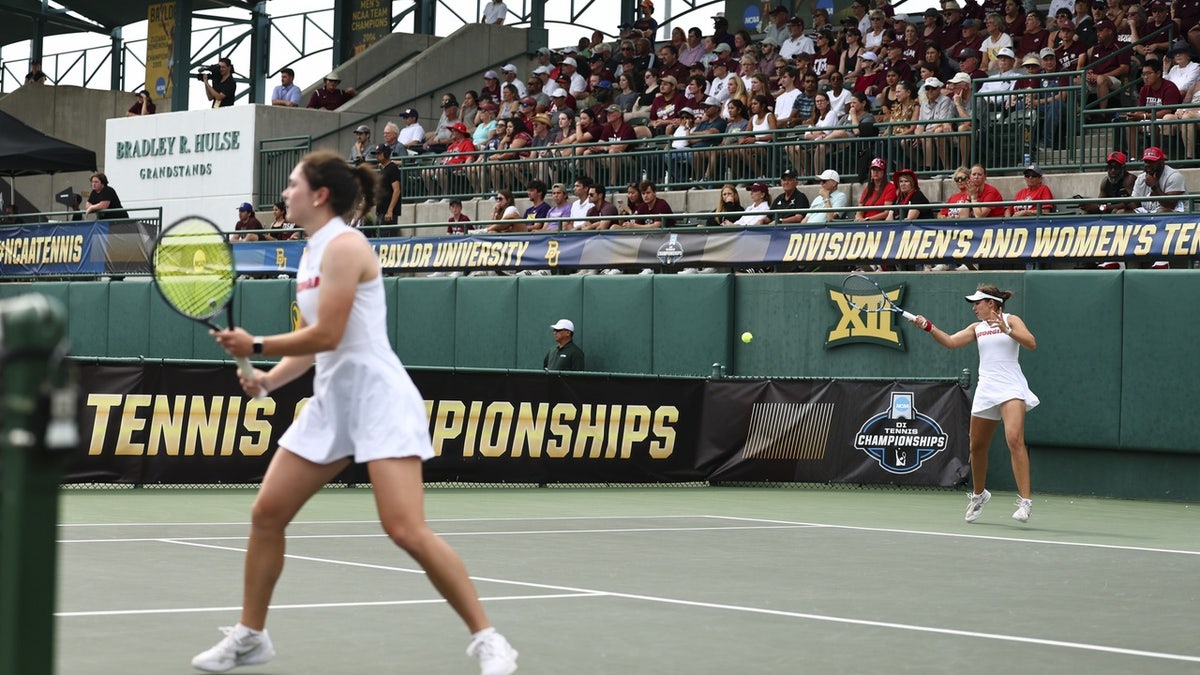
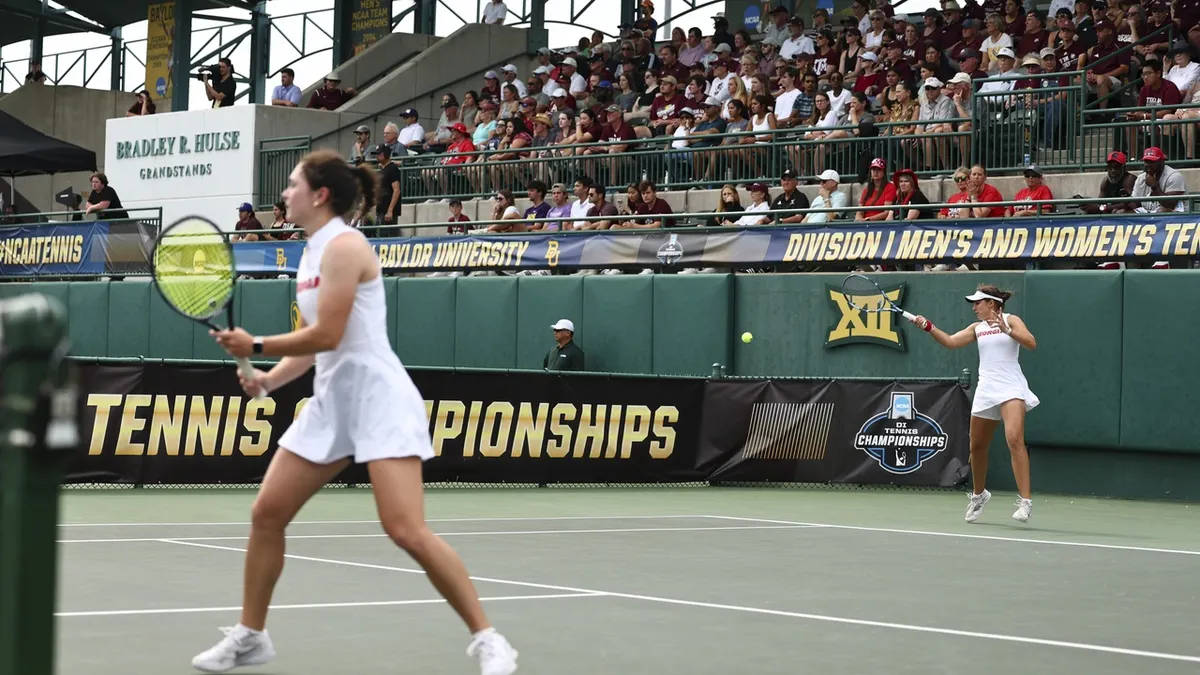
Anastasiia Lopata and Guillermina Grant of the Georgia Bulldogs compete in a doubles match against Daria Smetannikov and Lexington Reed of the Texas A&M Aggies during the NCAA Division I Women’s Tennis Championship held at the Hurd Tennis Center on May 18, 2025, in Waco, Texas. (Photo by Tyler Schank/NCAA Photos via Getty Images)
Have universities begun prioritizing winning over developing students?
The question extends far beyond tennis.
In recent years, college athletics has undergone a dramatic transformation. The transfer portal, NIL money, conference realignment and growing financial pressures have created powerful incentives to pursue immediate success. Coaches are increasingly rewarded for winning now, not developing athletes over time.
When immediate results become the priority, recruiting strategies change.
The quickest path to victory is often to acquire older, more experienced athletes who can contribute immediately.
That trend is particularly visible in sports like tennis. Current NCAA data shows that approximately 64% of men’s Division I tennis players and 61% of women’s players are international, the highest percentages of any sport. In some conferences, the numbers are even more striking.
But tennis is not the story.
Tennis is the warning sign.
The larger story is what these changes may mean for the developmental mission of college athletics itself.
For decades, college sports served as one of America’s most important talent-development systems. Universities helped young athletes mature physically, emotionally and academically. They produced Olympians, national team players, coaches, business leaders and countless successful professionals whose careers had little to do with sports.
The goal was not simply to identify finished products.
In recent years, college athletics has undergone a dramatic transformation. The transfer portal, NIL money, conference realignment and growing financial pressures have created powerful incentives to pursue immediate success. Coaches are increasingly rewarded for winning now, not developing athletes over time.
It was to develop potential.
Increasingly, that mission appears to be under pressure.
Parents see it. Coaches see it. Athletes certainly see it.
Across a range of sports, American athletes are finding it harder to earn scholarships, roster spots and meaningful playing opportunities. Even highly accomplished junior athletes are increasingly asking whether the pathway that once existed for them is still there.
TOM BRADY IMPLORES PARENTS TO ‘TEACH YOUR KID THE RIGHT VALUES’ AMID RISE OF NIL IN COLLEGE SPORTS
Many families are responding accordingly.
Why spend years training, traveling and investing in youth sports if the opportunities that once justified those sacrifices are becoming increasingly difficult to access?
That question should concern anyone who cares about the future of American athletics.
To be clear, this is not an argument against international athletes.
Many are outstanding competitors, excellent students and valued members of their campuses. They are taking advantage of opportunities available to them, just as any ambitious young person would.
The responsibility lies not with the athletes but with the incentives that universities have created.
Nor is this simply a question of nationality.
In some sports, athletes arrive on American campuses after years of high-level competition overseas. It is not unusual to see athletes in their mid-20s competing against 18-year-old freshmen. Most Americans would recognize that as an uneven playing field.
The quickest path to victory is often to acquire older, more experienced athletes who can contribute immediately.
Again, the issue is not individual athletes.
It is the system.
The consequences may extend far beyond college campuses.
When universities shift from developing athletes to importing finished ones, they weaken the pipeline that has historically helped produce American Olympians, national team members and future leaders in sport.
PGA TOUR STAR JUSTIN THOMAS RIPS NCAA FOR CURRENT STATE OF COLLEGE SPORTS
At one point this spring, the University of Arkansas announced it would eliminate both its men’s and women’s tennis programs. The decision sent shockwaves through college tennis and raised broader concerns about the future of Olympic and developmental sports.
To its credit, the university later reversed course and reinstated the programs. That outcome was welcome news for athletes, coaches and supporters of college sports.
But the episode itself remains instructive. The fact that a major SEC institution seriously considered eliminating nationally competitive tennis programs should serve as a warning sign. Arkansas may have changed direction, but the financial and structural pressures that led to the decision have not disappeared.
SEC SPRING MEETINGS TURN INTO BLUNT REALITY CHECK FOR BROKEN COLLEGE ATHLETICS
Either way, it deserves attention.
Because the central question is not whether college sports should remain globally competitive.
They should.
NORTHERN ILLINOIS COACH THOMAS HAMMOCK RAILS AGAINST NIL ERA’S SHORTCOMINGS IN IMPASSIONED SPEECH
The question is whether universities still view athletic programs as part of their educational mission.
For generations, winning and development were viewed as complementary goals. Coaches built programs. Athletes improved over time. Universities invested in young people.
Today, that balance appears to be shifting.
HERE’S WHY NICK SABAN AND NOTRE DAME’S PETE BEVACQUA ARE WRONG ABOUT NIL RUINING COLLEGE FOOTBALL
Universities have every right to pursue excellence. But excellence should include developing students, not simply acquiring talent.
Across a range of sports, American athletes are finding it harder to earn scholarships, roster spots and meaningful playing opportunities. Even highly accomplished junior athletes are increasingly asking whether the pathway that once existed for them is still there.
That is especially true for institutions that receive public support, benefit from alumni generosity and occupy a unique place in American life.
The mission of a university is not merely to assemble the strongest possible roster.
NCAA SETTLEMENT CHAOS: NEW LEGAL MOVE COULD TRIGGER MASSIVE INCREASE IN NIL SPENDING
It is to educate, develop and prepare the next generation.
College sports should support that mission.
CLICK HERE FOR MORE FOX NEWS OPINION
If we lose sight of that principle, we risk losing something far more important than a few roster spots.
We risk losing one of the most successful athlete-development systems ever created.
CLICK HERE TO DOWNLOAD THE FOX NEWS APP
Arkansas showed that these outcomes are not inevitable. Institutions can still choose to invest in development, opportunity and the next generation of athletes.
The question is whether more universities will make that choice before those pathways become significantly harder to rebuild.