







NEWYou can now listen to Fox News articles!
For years, President Donald Trump has criticized NATO’s European allies for relying too heavily on the United States for military defense. Heading into July’s NATO summit, disagreements about Iran and defense spending threatened to overshadow what was expected to be a pivotal meeting for the alliance.
Instead, Trump administration officials believe the summit showed Trump’s yearslong pressure campaign is beginning to pay off.
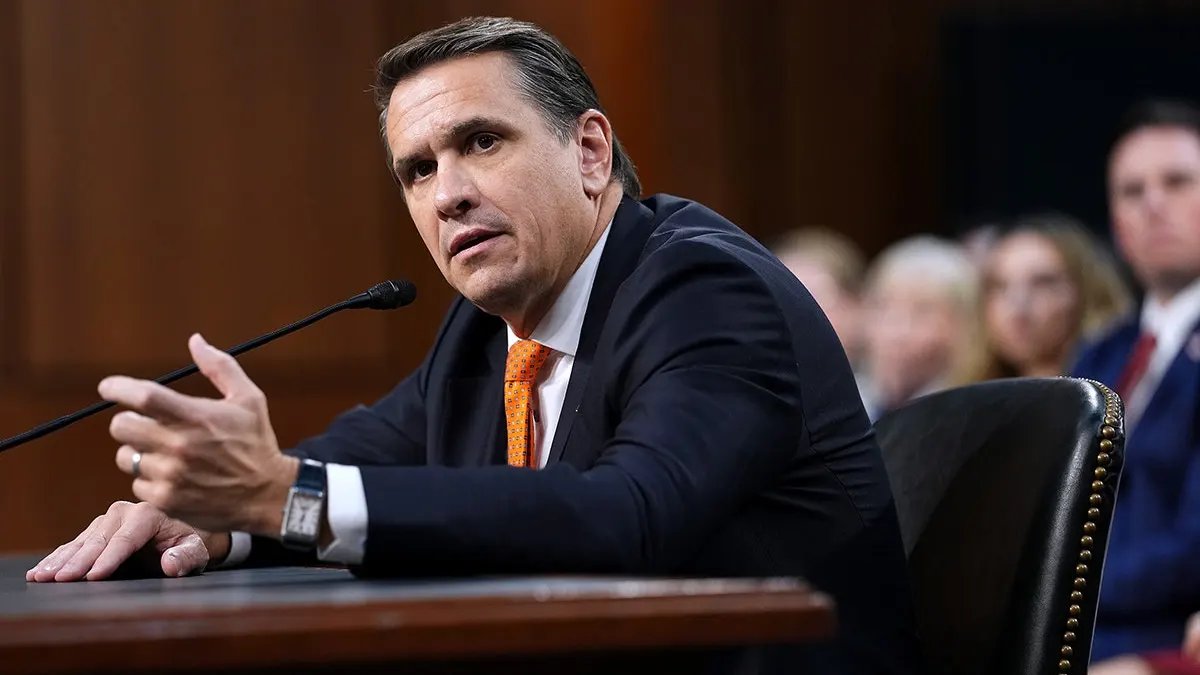
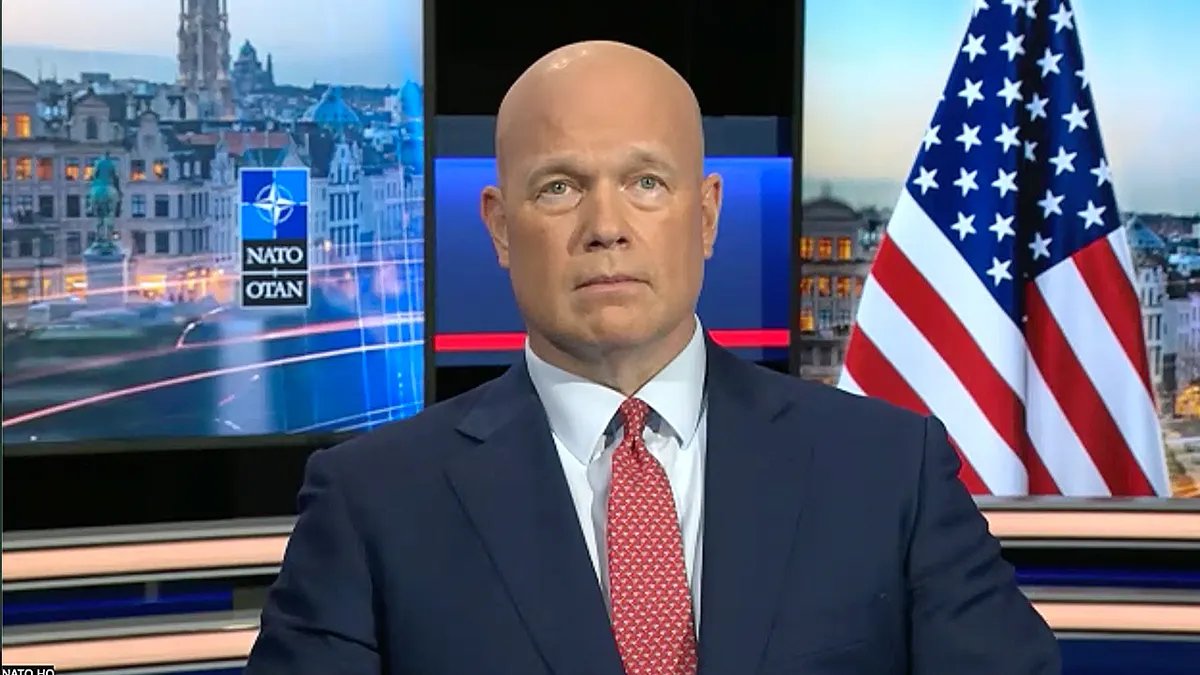
“The summit was a huge success,” Matthew Whitaker, the U.S. ambassador to NATO, told Fox News Digital in an interview. “President Trump has found, I think, a NATO that is more capable and increasingly stronger and is equalizing with the United States.”
TRUMP ENTERS FINAL NATO SUMMIT DAY AS UKRAINE, DEFENSE SPENDING TAKE CENTER STAGE
And while Whitaker described the alliance’s trajectory as overwhelmingly positive, he acknowledged not every ally is moving at the same pace.
“I know exactly where every ally is,” he said. “I make phone calls and make visits depending on where allies are falling out.”
PENTAGON SLASHES NATO COMBAT COMMITMENTS AS TRUMP PUSHES EUROPE TO DEFEND ITSELF
At the 2025 NATO Summit in The Hague, allies agreed to boost defense spending to 5% of GDP by 2035, a significant increase from the alliance’s long-standing 2% benchmark. In 2026, Whitaker said he’s monitoring each ally’s progress on a monthly dashboard.
Whitaker said the administration believes years of pressure from Trump are beginning to produce the alliance the president has long envisioned: one in which Europe assumes far greater responsibility for its own defense while allowing the U.S. to focus more heavily on other global priorities.
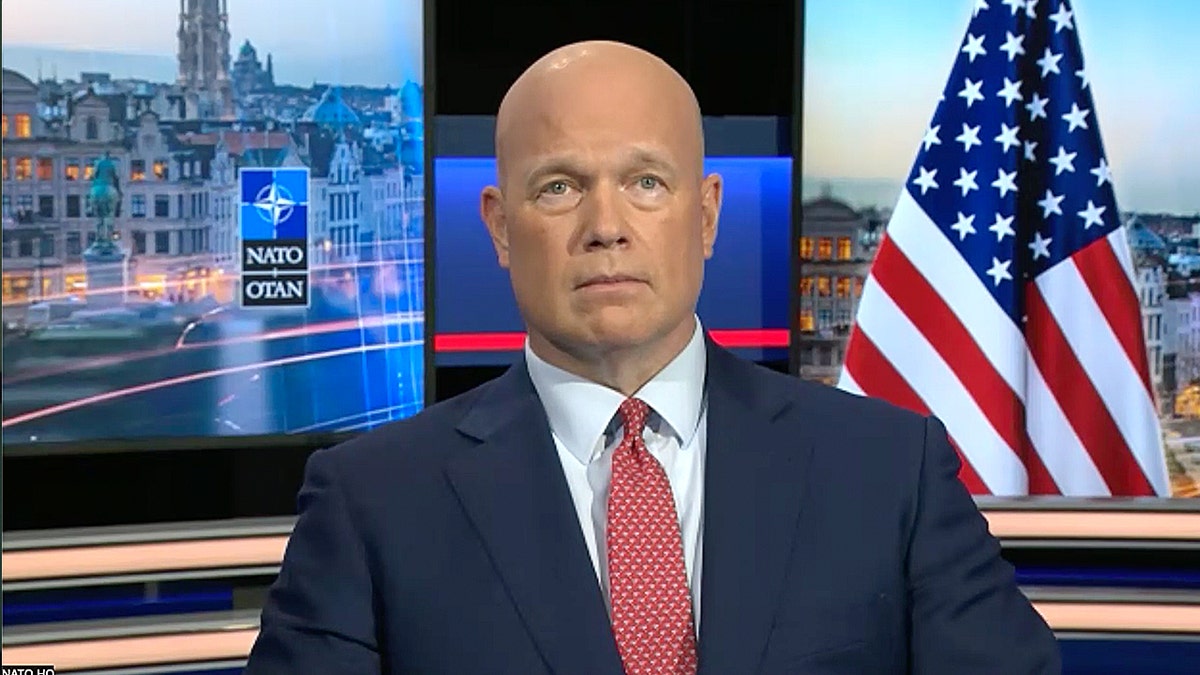
“The summit was a huge success,” Matthew Whitaker, the U.S. ambassador to NATO, told Fox News Digital in an interview. “President Trump has found, I think, a NATO that is more capable and increasingly stronger and is equalizing with the United States.” (Fox News Digital )
He praised Poland, Latvia, Lithuania, Estonia, Greece and Turkey for aggressively increasing defense spending while identifying Spain, France, Italy and the United Kingdom as countries he continues to watch closely.
“I think ultimately Spain is going to live up to their commitments,” Whitaker said. “They can be a capable ally. They have a very dynamic and growing economy that could support more defense spending.”
Spain emerged as the administration’s most public point of friction during the summit.
Trump called the country a “terrible partner” and a “wasted cause,” threatened to cut off trade, and criticized Madrid both for initially resisting NATO’s new 5% defense spending target and for refusing to allow the U.S. to use Spanish bases and airspace during operations against Iran.
Whitaker pointed to nearly $150 billion in additional allied defense spending over the past year and a growing push to expand European defense production as evidence that the alliance is moving in the direction the Trump administration has long demanded.
“We’re going to address our priorities,” he said. “And that’s first the homeland and our Western Hemisphere. The Pacific is an area that we are going to be more capable and ready, and Europe is fourth on the list.”
“That doesn’t mean that we’re leaving Europe, it doesn’t mean that we’re abandoning our allies,” he said. “It just means we’re expecting them to take over the conventional defense of the continent.”
WHY NATO’S DEFENSE SPENDING IMBALANCE LASTED FOR DECADES
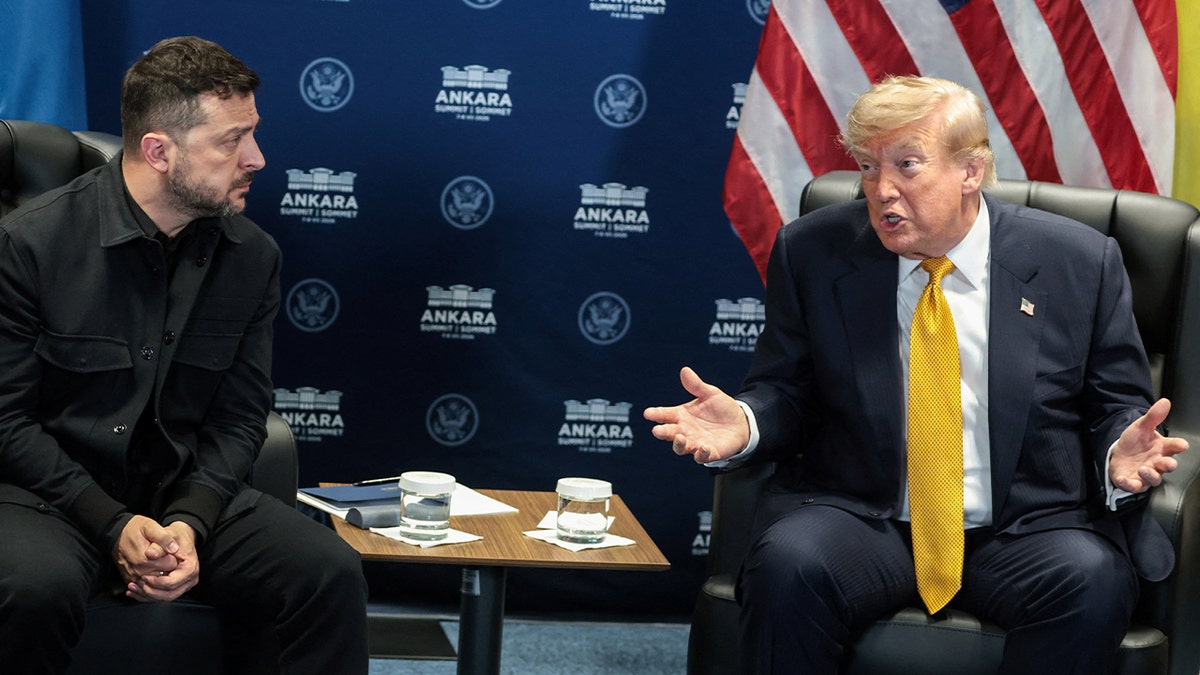
President Donald Trump meets with Ukrainian President Volodymyr Zelenskyy during the NATO leaders summit in Ankara, Turkey, July 8, 2026. (Jonathan Ernst/Reuters)
Even as allies celebrated new spending commitments, European officials acknowledge that rearming the continent will require years of sustained political support, expanded industrial capacity and difficult budget decisions before the alliance reaches the capabilities envisioned in Ankara.
NATO Secretary-General Mark Rutte has repeatedly emphasized that governments must now present “clear, concrete and credible plans” for reaching the target rather than simply making political commitments.
The summit also came as the administration reviews U.S. force posture in Europe, prompting questions among allies — particularly those on NATO’s eastern flank — about what greater burden-sharing could mean for the future U.S. military presence.
The administration argues the force posture review is directly tied to burden-sharing: if Europe assumes more responsibility for defending the continent, Washington can reassess where and how U.S. forces are deployed.
In recent weeks, the Trump administration has sent mixed signals on troop deployments, including a halted rotation to Poland, a subsequent announcement of additional forces and the launch of a broader review of U.S. force posture on the continent.
Allies like Poland have argued that its heavy investment in defense and frontline position should be reflected in a stronger U.S. military presence. Whitaker said allies that spend more should expect deeper engagement with Washington but stressed that decisions on U.S. force posture are driven by broader global security considerations rather than any one country’s spending.
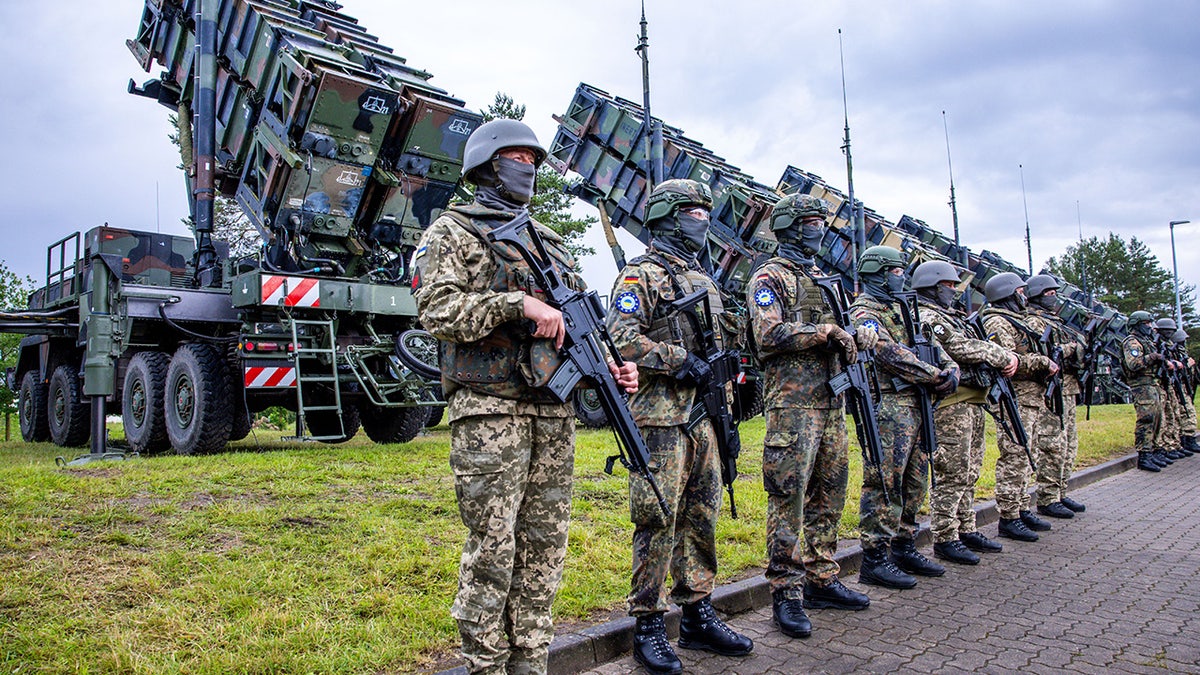
The summit also came as the administration reviews U.S. force posture in Europe, prompting questions among allies — particularly those on NATO’s eastern flank — about what greater burden-sharing could mean for the future U.S. military presence. (Jens Büttner/picture alliance via Getty Images)
“It is an ongoing evaluation of where we need to deploy, where we can project power from, and how we deter and defend,” Whitaker said. “It’s a complicated conversation, but it’s one that we’re currently having right now within the government and with our allies.”
For Whitaker, the debate over burden-sharing is no longer simply about how much allies spend.
The larger question, he said, is whether those investments translate into the military capabilities Europe will need to assume a greater share of its own defense.
Those commitments extended beyond spending targets and into the kinds of military capabilities NATO allies are expected to field over the coming decade.
Germany announced plans to acquire U.S.-made Tomahawk cruise missiles, giving Europe’s largest economy a long-range conventional strike capability that Chancellor Friedrich Merz said would close a key gap in Germany‘s defenses. The purchase is part of a broader effort by European allies to rebuild military capabilities that have atrophied since the end of the Cold War.
Whitaker said the Tomahawk purchase was only one example of the capabilities NATO allies will need to field in the coming years.
“It’s an all-of-the-above approach,” he said. “Whether it’s frigates, whether it’s air defense, whether it’s deep strike, whether it’s tanks and drones, all of that needs to be increased in manufacturing capacity. It needs to be fielded and ready to defend and deter.”
The summit also underscored a growing emphasis on expanding defense production across the alliance.
CLICK HERE TO DOWNLOAD THE FOX NEWS APP
Trump announced that Ukraine would be permitted to establish domestic Patriot missile production, while Lockheed Martin unveiled plans to help establish a Patriot Advanced Capability-3 missile sustainment facility in Europe. Other agreements included expanded European production of Army Tactical Missile Systems, Stinger missiles and additional air defense systems through partnerships between U.S. and European defense firms.
The White House has cast those announcements as evidence of what it has called a new “NATO 3.0” model, arguing that greater European defense investment will both strengthen the alliance and create demand for American defense manufacturers.
Administration officials said more than $3 billion in defense agreements and joint ventures announced during the summit would support U.S. industry while expanding Europe’s ability to manufacture critical military capabilities closer to the continent.