




Introduction
Samsung’s summer hardware showcase has officially concluded, and the landscape of mobile technology has shifted once again. Broadcasting live from London, the mid-year event delivered exactly what tech enthusiasts were anticipating: an aggressive push into artificial intelligence, refined foldable form factors, and a bold expansion of its wearable ecosystem.
As a seasoned technology journalist tracking the mobile space for over a decade, I can say this year’s presentation felt distinct. Samsung isn’t just updating hardware; they are fiercely defending their territory against a surging wave of competitors.
The core message from the presentation was unmistakable: hardware is now the vessel, but Galaxy AI is the captain. Let’s break down the most significant Samsung Galaxy Unpacked 2026 highlights, from the ultra-premium foldables to their surprising new smart glasses.
Galaxy Unpacked 2026 at a Glance
This year’s mid-year event fundamentally restructured Samsung’s foldable lineup and aggressively expanded its wearable portfolio. The company introduced a two-tier approach to its flagship book-style foldable, finally answering consumer demands for varying sizes and price points.
We also witnessed the debut of a brand-new product category for the Korean tech giant, signaling a serious commitment to the emerging mixed-reality space.
Pre-orders for the newly announced devices are already live across major carriers and Samsung’s official website. General retail availability is scheduled to begin on August 7, 2026, for most markets.
Biggest Announcements
The sheer volume of hardware revealed at Unpacked was impressive. While leaks had painted a relatively accurate picture beforehand, seeing the final products on stage provided crucial context regarding Samsung’s overarching strategy.
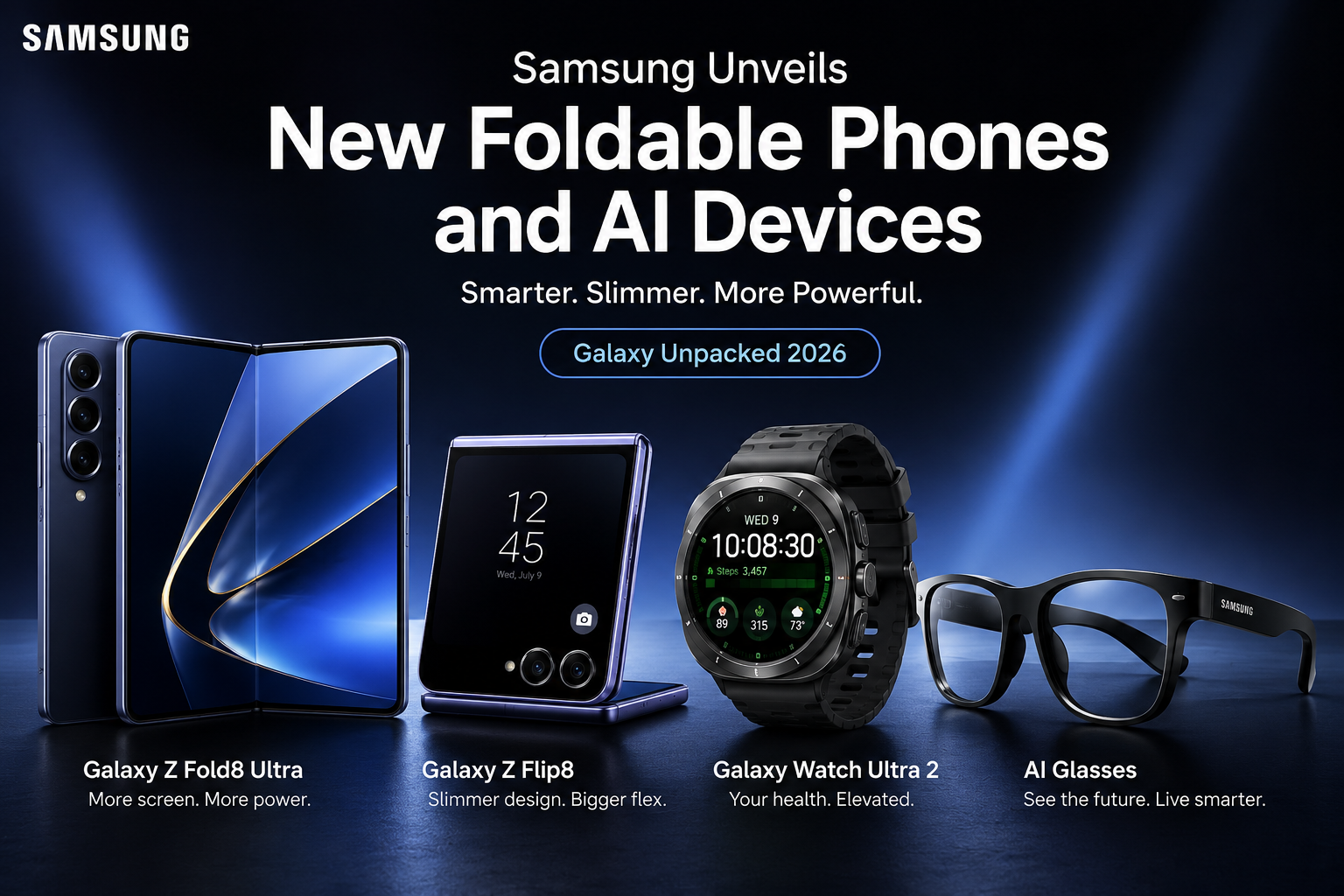
Here is a quick summary of the core devices unveiled:
- Galaxy Z Fold 8 Ultra: The uncompromising, top-tier foldable with maximum performance and enhanced cameras.
- Galaxy Z Fold 8: A newer, slightly wider, and more compact approach to the book-style foldable.
- Galaxy Z Flip 8: The mainstream clamshell, focusing on refined design and under-the-hood efficiency.
- Galaxy Watch Ultra 2: A rugged, ultra-bright smartwatch aimed squarely at outdoor enthusiasts.
- Galaxy Watch 9: The standard, everyday wearable with incremental health tracking upgrades.
- Samsung Intelligent Eyewear: The company’s first foray into lightweight, AI-powered smart glasses.
Table 1: Major Announcements Breakdown
| Product Category | Major Improvements | Target Users |
|---|---|---|
| Z Fold 8 Ultra | 200MP main camera, Snapdragon 8 Elite Gen 5, 5,000mAh battery | Power users, enterprise professionals |
| Z Fold 8 | New 4:3 aspect ratio, wider cover screen, thinner profile | Mainstream foldable adopters |
| Z Flip 8 | Exynos 2600 chip, 6.1mm unfolded thickness, One UI 9 | Fashion-conscious users, creators |
| Watch Ultra 2 | 5,000-nit display, 800mAh battery, Snapdragon Wear Elite | Athletes, outdoor adventurers |
| Intelligent Eyewear | Gemini AI integration, Android XR, 9-hour battery | Tech early adopters, AR enthusiasts |
Galaxy Z Fold Series
Samsung has fundamentally changed its approach to the Z Fold line. Recognizing that one size does not fit all, the company has officially split its flagship foldable into two distinct models. This is arguably one of the most critical Samsung Galaxy Unpacked 2026 highlights.
The Galaxy Z Fold 8 Ultra
Taking the mantle as the true flagship, the Galaxy Z Fold 8 Ultra is a behemoth designed for uncompromising power users. It retains the massive 8-inch main display and the classic 6.49-inch cover screen.
Under the hood, it packs the customized Qualcomm Snapdragon 8 Elite Gen 5 for Galaxy chipset. Samsung has also addressed long-standing battery complaints by upgrading the capacity to a substantial 5,000mAh.
However, this premium experience comes at a steep cost. The starting price has been raised to an eye-watering $2,099.99 for the 256GB base model.
The Standard Galaxy Z Fold 8
The standard Galaxy Z Fold 8 is arguably the more interesting device from a design perspective. It introduces a brand new, wider aspect ratio that unfolds into a 7.6-inch inner panel with a 4:3 ratio.
This model is significantly more compact, measuring just 4.5mm thick when unfolded and weighing 201 grams. It utilizes a 4,800mAh battery and features a dual 50MP camera setup (main and ultra-wide). Starting at $1,899, it aims to pull users away from traditional slab phones with a more comfortable, pocketable design.
Table 2: Galaxy Z Fold 8 Ultra vs. Previous Generation
| Feature | Z Fold 8 Ultra (2026) | Z Fold 7 (2025) |
|---|---|---|
| Processor | Snapdragon 8 Elite Gen 5 | Snapdragon 8 Gen 4 for Galaxy |
| Main Camera | 200MP | 50MP |
| Ultra-Wide | 50MP | 12MP |
| Battery | 5,000mAh | 4,400mAh |
| Starting Price | $2,099.99 | $1,999.99 |
Galaxy Z Flip Series
While the Fold series saw a dramatic restructuring, the clamshell lineup received a more conservative update. The Galaxy Z Flip 8 is a refinement rather than a revolution, focusing on subtle design tweaks and internal processing power.
The most noticeable physical change is its slimmed-down profile. The Z Flip 8 now measures just 6.1mm when unfolded and weighs 180 grams, making it the thinnest and lightest Flip device to date.
Interestingly, Samsung has equipped the global variants of the Flip 8 with its proprietary Exynos 2600 chipset, departing from the Qualcomm silicon used in the Fold series. Like the Fold Ultra, the Flip 8 has also seen a price increase, now starting at $1,199.
Samsung’s AI Strategy
Artificial Intelligence was the undeniable undercurrent of the entire presentation. Samsung is no longer just selling hardware specs; they are selling the “Galaxy AI” experience.
The integration of Google’s Gemini Intelligence into the new One UI 9 (based on Android 17) represents a massive leap forward. Samsung highlighted on-device processing capabilities, ensuring that features like real-time translation and advanced photo editing are faster and more private.
The new software introduces features like custom widget generation via text prompts and enhanced multitasking capabilities through “App Bubbles.” It is clear that Samsung views AI as the primary differentiator in an increasingly saturated smartphone market.
Galaxy Watch Updates
The wearable segment of the presentation delivered two distinct approaches to wrist-based technology. Both new smartwatches are powered by the new 3nm Snapdragon Wear Elite processor, prioritizing efficiency and AI-driven health metrics.
Galaxy Watch Ultra 2
The Galaxy Watch Ultra 2 is a statement piece aimed directly at the Apple Watch Ultra. It retains the rugged “squircle” design of its predecessor but brings serious hardware upgrades.
The standout feature is its blindingly bright 1.52-inch display, capable of hitting a peak brightness of 5,000 nits. Samsung also increased the battery size to a massive 800mAh, catering to extreme endurance athletes. It launches at a premium price point of $699.
Galaxy Watch 9
The standard Galaxy Watch 9 represents a more iterative update. It maintains the familiar circular design and comes in 40mm and 44mm sizes.
The primary improvements lie in its AI-driven health monitoring software and a slight battery increase for the larger model. The Watch 9 remains the accessible entry point into Samsung’s wearable ecosystem, starting at $379.99 for the 40mm Wi-Fi variant.
Table 3: Galaxy Watch Comparison
| Specification | Galaxy Watch Ultra 2 | Galaxy Watch 9 (44mm) |
|---|---|---|
| Starting Price | $699.99 | $409.99 (est.) |
| Display Brightness | 5,000 nits | 2,000 nits (est.) |
| Battery Capacity | 800mAh | 425mAh |
| Storage | 64GB | 32GB |
| Connectivity | LTE Standard | Wi-Fi / LTE options |
Wearables and AI Ecosystem
The most surprising among the Samsung Galaxy Unpacked 2026 highlights was the official reveal of the Samsung Intelligent Eyewear. This marks Samsung’s aggressive entry into the smart glasses market, developed in partnership with Google and Qualcomm.
Rather than bulky augmented reality headsets, these are lightweight, stylish frames designed for all-day wear. Powered by the Snapdragon AR1 Gen 1 processor and running on the Android XR platform, they serve as a hands-free conduit for Google Gemini and Samsung Bixby.
Features demonstrated included real-time visual translation, turn-by-turn navigation, and contextual AI assistance based on what the built-in camera sees. While a specific release date and pricing were not provided, Samsung confirmed they would launch later this year.
Design Improvements
Across the board, Samsung’s design language for 2026 is focused on refinement and miniaturization. The Galaxy Z Fold 8’s new aspect ratio makes it arguably the most comfortable book-style foldable the company has ever produced.
The Z Flip 8’s reduction in thickness to 6.1mm makes a noticeable difference in pocketability. Even the rugged Watch Ultra 2 managed to trim its profile by 12% compared to the previous generation, proving that durability doesn’t necessarily require immense bulk.
Software Features
Software is where the true value of these devices is realized. The foldables will launch as some of the first devices globally to feature Android 17 out of the box, layered with Samsung’s heavily customized One UI 9.
A major focus was placed on the new “Rambler” feature within Gboard, which cleans up dictated text for better flow using AI. The integration of Gemini Intelligence deeply into the OS means users can rely less on specific apps and more on conversational commands to control their devices.
Performance Improvements
Performance metrics look incredibly promising, though they require real-world validation. The Galaxy Z Fold 8 series utilizes the Snapdragon 8 Elite Gen 5, built on a 3nm process. This chip promises massive gains in AI processing, essential for the demanding One UI 9 features.
The Galaxy Z Flip 8’s use of the Exynos 2600 is a bold move. Built on Samsung’s new 2nm GAA technology, early leaks suggest it will excel in multitasking and power efficiency, though historical performance gaps between Exynos and Snapdragon chips mean tech enthusiasts will be watching this closely.
Productivity Features
For the Fold series, productivity remains the core selling point. The wider inner screen on the standard Z Fold 8 is specifically designed to improve multitasking with side-by-side apps.
Samsung also highlighted improvements to the Flex Mode software, ensuring more third-party apps automatically adjust when the screen is partially folded. The Z Fold 8 Ultra continues to support the S Pen, solidifying its position as the ultimate mobile workstation.
Camera Improvements
Note: The following details are based strictly on verified announcements.
The Galaxy Z Fold 8 Ultra received the most significant optical upgrades. It now boasts a massive 200MP primary sensor, bringing it in line with the Galaxy S series flagships. Furthermore, the ultra-wide lens has been upgraded from 12MP to a much sharper 50MP sensor.
The standard Z Fold 8 and the Z Flip 8 both utilize a dual-camera setup featuring a 50MP main sensor and a 12MP ultra-wide. While not industry-leading, the inclusion of the new ProVisual Engine promises better dynamic bokeh and more natural skin tones through computational photography.
Battery & Charging
Note: The following details are based strictly on verified announcements.
Battery anxiety has historically plagued foldable phones. Samsung addressed this head-on with the Fold series. The Z Fold 8 Ultra features a robust 5,000mAh capacity, while the smaller Z Fold 8 utilizes a 4,800mAh cell. Both support 45W fast wired charging.
The Z Flip 8, however, retains the 4,300mAh battery capacity of its predecessor, sticking with slower 25W wired charging. In the wearable space, the Watch Ultra 2’s massive 800mAh battery is a standout specification.
Samsung vs Competitors
Samsung is no longer operating in a vacuum. Chinese manufacturers like Honor and OnePlus have released incredibly thin and capable foldables, while Apple dominates the premium smartwatch sector.
The Galaxy Z Fold 8’s new wider aspect ratio is a direct response to the OnePlus Open and the Google Pixel Fold, which were praised for their more traditional outer screens. The Watch Ultra 2’s 5,000-nit display and 800mAh battery are aggressive counters to the Apple Watch Ultra line. Samsung is relying heavily on its deeply integrated AI ecosystem to maintain its market leadership.
Why Galaxy Unpacked 2026 Matters
This event matters because it signifies the maturation of the foldable market. We are no longer looking at experimental prototypes. The introduction of varying form factors within the Fold line shows that Samsung is attempting to cater to specific consumer demographics rather than forcing a one-size-fits-all solution.
Furthermore, the announcement of the Intelligent Eyewear indicates that the smartphone may not be the center of our digital lives forever. Samsung is actively preparing for a post-smartphone, mixed-reality future.
Should You Upgrade?
The decision to upgrade depends entirely on your current device.
If you own a Galaxy Z Fold 5 or older, the upgrades to the Z Fold 8 Ultra’s cameras and battery are monumental. If you want to try a foldable for the first time, the new form factor of the standard Z Fold 8 is incredibly compelling.
However, if you own last year’s Z Flip 7, the Flip 8 offers very little incentive to upgrade, especially considering the $100 price hike.
Regarding wearables, extreme athletes will find the Watch Ultra 2’s brightness and battery hard to resist, but everyday users are likely fine keeping their older Galaxy Watches for another year.
Expert Analysis
From an editorial standpoint, Samsung’s hardware execution at Unpacked 2026 was largely successful. The hardware is refined, and the build quality remains top-tier.
However, the aggressive pricing strategy is a significant risk. Pushing the Flip to $1,199 and the Fold Ultra past $2,000 alienates a massive portion of the consumer base.
The success of these devices will hinge entirely on whether consumers find the deeply integrated “Galaxy AI” features valuable enough to justify the premium cost. If the AI feels like a gimmick rather than a necessity, these devices may struggle against cheaper, hardware-focused competitors.
Future of Samsung AI
The Intelligent Eyewear is the clearest indicator of Samsung’s future AI roadmap. The company envisions an ecosystem where AI is ubiquitous, ambient, and hands-free.
By deeply partnering with Google for Gemini integration across all its devices, Samsung is positioning its hardware as the premier portal to the world’s most advanced AI models. Expect future Unpacked events to focus even less on megapixel counts and battery sizes, and more on autonomous software capabilities.
Final Verdict
The Samsung Galaxy Unpacked 2026 highlights paint a picture of a confident company doubling down on its strengths. The split of the Fold series was a necessary evolution, and the Watch Ultra 2 is a spec monster.
While the price increases sting, the hardware and software synergy on display is undeniable. The true wild card is the Intelligent Eyewear, which has the potential to redefine Samsung’s wearable strategy for the next decade.
Conclusion
Samsung Galaxy Unpacked 2026 was a defining moment for the company. By restructuring its flagship foldables, pushing the boundaries of smartwatch displays, and entering the smart glasses arena, Samsung has set the technological pace for the latter half of the year.
Whether these devices can overcome their high entry prices in a challenging economic climate remains to be seen. However, one thing is certain: the AI hardware war has officially begun, and Samsung has arrived heavily armed.
Frequently Asked Questions
1. When is the release date for the new Samsung Galaxy Z Fold 8? Pre-orders are live now, and general availability begins on August 7, 2026, for most global markets.
2. How much does the Galaxy Z Fold 8 Ultra cost? The Galaxy Z Fold 8 Ultra has a starting price of $2,099.99 for the base 256GB model.
3. What is the difference between the Fold 8 and Fold 8 Ultra? The standard Fold 8 has a new, wider, more compact 4:3 aspect ratio, a 4,800mAh battery, and a 50MP main camera. The Fold 8 Ultra retains the classic taller design, features a larger 5,000mAh battery, and boasts a 200MP main camera.
4. Did the price of the Galaxy Z Flip 8 increase? Yes, the starting price of the Galaxy Z Flip 8 has increased by $100 compared to last year, now starting at $1,199 in the United States.
5. What chip is inside the new Samsung foldables? The Galaxy Z Fold 8 series utilizes the Qualcomm Snapdragon 8 Elite Gen 5. Global variants of the Galaxy Z Flip 8 are powered by Samsung’s own Exynos 2600 processor.
6. What are the key features of the Galaxy Watch Ultra 2? The Galaxy Watch Ultra 2 features a rugged titanium design, a massive 800mAh battery, and an incredibly bright display capable of reaching 5,000 nits.
7. Did Samsung announce smart glasses at Unpacked 2026? Yes, Samsung officially revealed the “Samsung Intelligent Eyewear,” powered by Android XR and Google Gemini AI, designed for hands-free visual translation and assistance.
8. Do the new Samsung foldables support S Pen? Yes, the Galaxy Z Fold 8 Ultra continues to support S Pen input on its inner display.
9. What software do the new Galaxy phones run? The new foldables will launch running Samsung’s One UI 9, which is built on top of the newly released Android 17 operating system.
10. Are there any design changes to the Galaxy Watch 9? The Galaxy Watch 9 retains the same circular design as the previous generation, with upgrades focused internally on the new Snapdragon Wear Elite chip and AI health tracking features.