






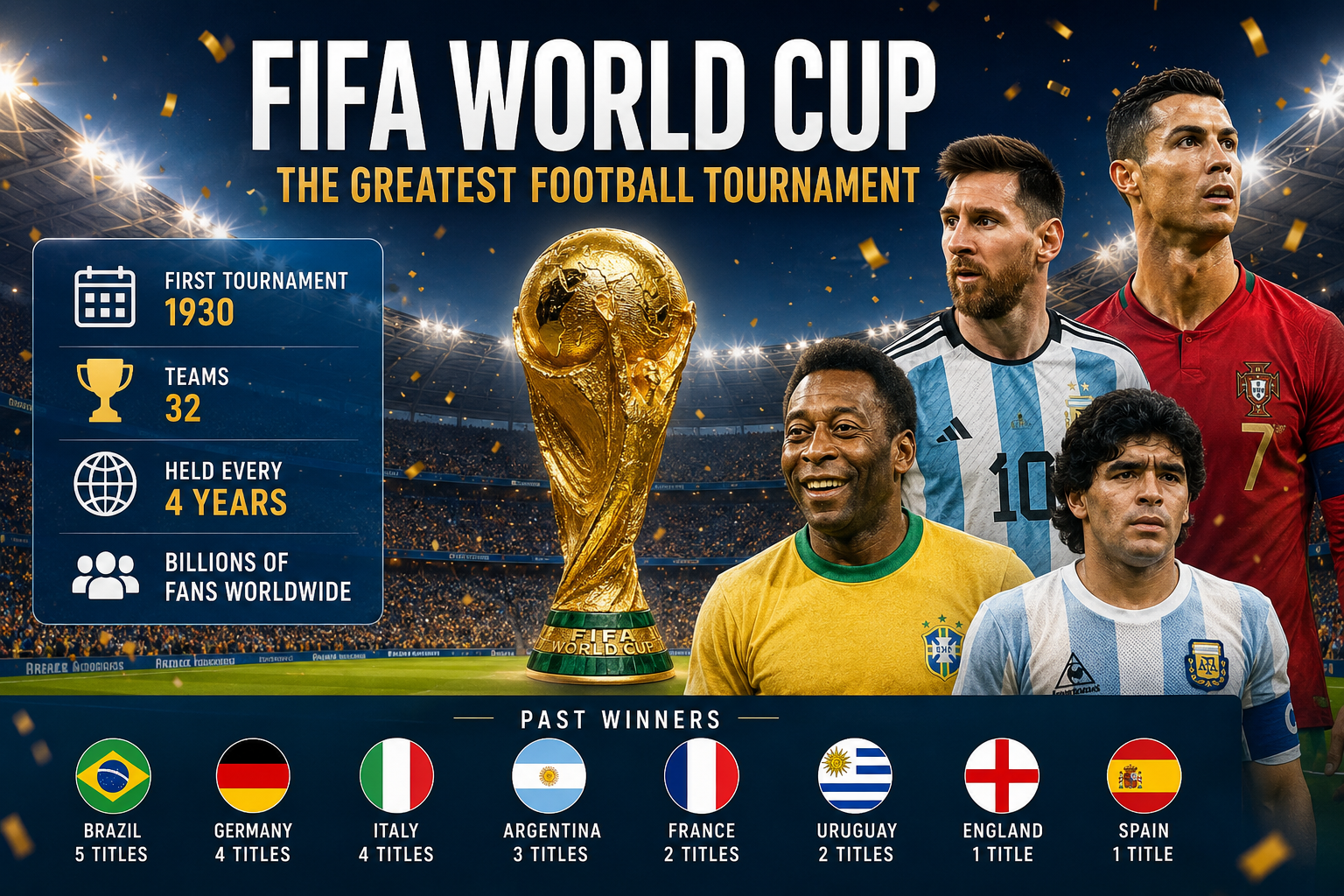
The FIFA World Cup is the biggest football tournament in the world. It brings together the best national teams from every continent to compete for the most prestigious trophy in international football. Millions of fans watch the event every four years, making it one of the most popular sporting events on the planet.
Whether you are new to football or a long-time fan, this guide explains the history of the FIFA World Cup, its format, famous champions, and interesting facts.
What Is the FIFA World Cup?
The FIFA World Cup is an international football competition organized by FIFA (Fédération Internationale de Football Association). The tournament features national teams that qualify through regional competitions.
The first FIFA World Cup took place in 1930 in Uruguay. Since then, it has become the most prestigious event in international football.
A Brief History of the FIFA World Cup
The inaugural tournament in 1930 included only 13 teams. Uruguay won the first World Cup by defeating Argentina in the final.
Over the years, the tournament has expanded significantly. Today, it attracts billions of viewers worldwide and showcases the world’s top football talent.
The FIFA World Cup was not held in 1942 and 1946 because of World War II. Since 1950, the tournament has been held every four years without interruption.
How the FIFA World Cup Works
The competition consists of two main stages:
Qualification Stage
National teams compete in regional qualifiers to earn a place in the tournament.
Final Tournament
Qualified teams play in a group stage followed by knockout rounds. The winner of the final match becomes the FIFA World Cup champion.
FIFA World Cup Winners List
Some of the most successful teams in World Cup history include:
- Brazil – 5 titles
- Germany – 4 titles
- Italy – 4 titles
- Argentina – 3 titles
- France – 2 titles
- Uruguay – 2 titles
- England – 1 title
- Spain – 1 title
These countries have produced many legendary football players and unforgettable matches.
Famous FIFA World Cup Players
Several football legends have made history in the FIFA World Cup, including:
- Pelé
- Diego Maradona
- Lionel Messi
- Cristiano Ronaldo
- Zinedine Zidane
- Ronaldo Nazário
- Miroslav Klose
Their performances have inspired millions of football fans around the world.
Interesting FIFA World Cup Facts
- Brazil is the only country to play in every FIFA World Cup.
- The tournament is watched by billions of people worldwide.
- The World Cup trophy is made of 18-carat gold.
- Miroslav Klose holds the record for the most World Cup goals.
- Every tournament creates unforgettable moments that become part of football history.
Why the FIFA World Cup Is So Popular
The FIFA World Cup brings together different cultures, passionate supporters, and elite football players. It creates unforgettable memories and unites fans from every corner of the world.
The excitement, national pride, and dramatic matches make it one of the greatest sporting events ever created.
Conclusion
The FIFA World Cup is much more than a football tournament. It is a global celebration of sport, teamwork, and national pride. From its historic beginnings in 1930 to today’s modern competition, the World Cup continues to inspire players and fans across generations.
If you enjoy football, learning about FIFA World Cup history and facts is a great way to appreciate the game’s rich tradition and unforgettable moments.

Sprawdz najlepsze kasyna z bonusem powitalnym bez depozytu, ktore oferuja wyjatkowe promocje dla nowych graczy.
Warto jednak dokladnie zapoznac sie z regulaminem takich ofert, aby uniknac nieprzyjemnych niespodzianek.