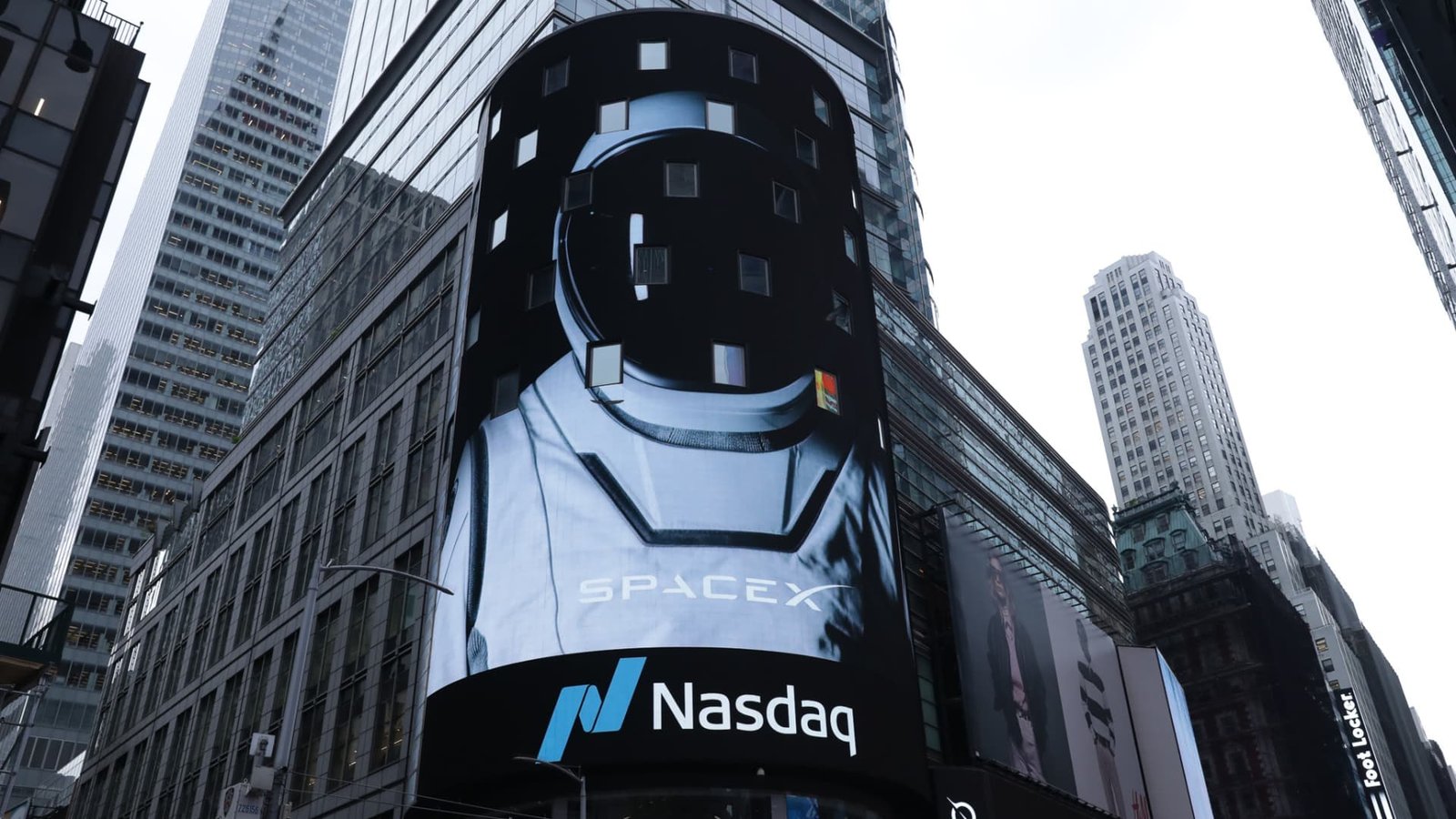








The next leg of the artificial intelligence boom may not be built entirely on Earth. SpaceX has paved the way for another potential avenue in space technology: compute capacity in orbit. Orbital computing might even be more credible than AI data centers built on Earth, based on four structural trends, Morgan Stanley researchers found, citing tighter constraints on land-based AI data centers, falling launch costs, advances in optical satellite networking and the rising volume of data generated in space. Orbital compute is a virtual data center with server racks in space supported by solar arrays, cooling radiators and laser-linked satellite networks. Such platforms might be less costly, ease constraints on earth, reduce environmental impacts and enable new capabilities for security-critical applications. Compute refers to the processing power, energy and infrastructure needed for AI models. Morgan Stanley doesn’t expect orbital computing to replace terrestrial hyperscale data centers this cycle, but notes that the more realistic near-term opportunity is orbital edge-AI, where satellites process imagery, sensor data and inference workloads in orbit before sending outputs back to Earth, said analyst Shawn Kim. Science fiction “Investing in space technology and exploration now represents an opportunity to participate at the forefront of frontier technology and defense innovation,” according to Jonathan Siegmann, research managing director at Stifel Financial. Commercial space profitability is no longer merely science fiction, as national security, civil and commercial space programs gain momentum, Siegmann said. The reusable launch model at SpaceX , for example, helped lower costs and moved the industry toward more scalable networks, while the company’s Starlink, a low-Earth-orbit broadband network, was a proof point for a commercial space business model and the key to SpaceX’s valuation in its recent initial public offering, the analyst said. . Kim at Morgan Stanley also sees reduced launch costs as one of the structural reasons orbital computing has suddenly become more realistic. Morgan Stanley found 43 companies tied to orbital compute, in areas ranging from AI and memory semiconductors, optical links, satellite communications hardware, radiation-tolerant chips and power systems. Orbital supply chain About a third of the companies (15) are based in the U.S. and dominate the orbital compute supply chain by market value, including Nvidia , Broadcom , Micron Technology and Advanced Micro Devices. The list also includes smaller stocks, such as Redwire , AXT and Mercury Systems , that help form the backbone of the supply chain, but which are less diversified and carry greater risk. Global supply chain Outside the U.S., Morgan Stanley’s orbital-compute supply chain includes companies listed in Asia and Europe that provide key hardware needed to make space-based compute work. In Taiwan, the list includes TSMC for advanced logic, MediaTek for satellite communications chips and Delta Electronics and Lite-On for power conversion. In South Korea, SK Hynix and Samsung Electronics are tied to memory and AI compute payloads, while in Europe STMicroelectronics and Infineon are key enablers of radiation-hardened and space-grade semiconductors, the investment bank said. Stocks in Japan that play into the theme include Murata , TDK , GS Yuasa and Sharp .
SpaceX racing to orbital data centers. Ways to play emerging technology