









The EV landscape in the United States may be on the verge of a regime change.
Tesla sales and production numbers, reported Thursday, July 2nd, were very strong. The company reported producing 451,758 vehicles and delivering 480,126 vehicles – 18% higher than the consensus estimate of 406,600 deliveries.
Despite this, the stock did not perform particularly well. $1.5 trillion is a demanding valuation, approximately 15x trailing 12-month sales.
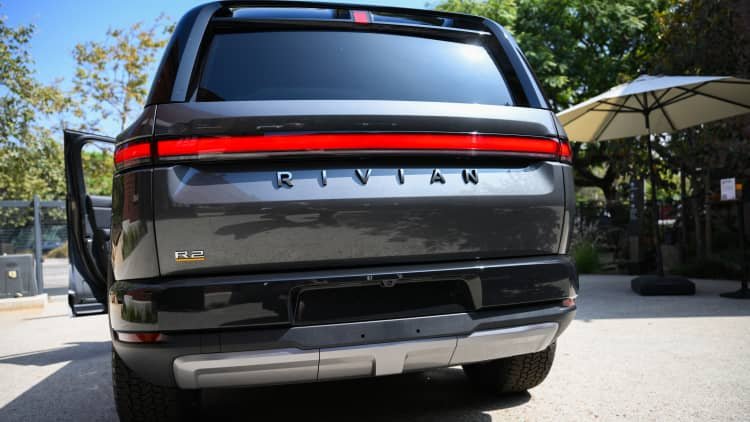
Meanwhile, much smaller EV competitor Rivian recently launched a mid-market SUV, the R2, targeting the most competitive segment currently led by the Tesla Model Y. How much smaller is Rivian? Tesla’s market capitalization is, as I write this, $1.48 trillion. Rivian’s market capitalization is $23.5 billion. Tesla sold nearly 1.64 million cars in 2025. Rivian sold just 42,247.

Tesla, YTD
But here’s the thing: 96.9% of the cars Tesla sold last year were Model 3/Y. The Model S, X, and Cybertruck combined made up just 3.1%. Why does this matter? Because until now Rivian only competed with those expensive vehicles with their $100k+ R1S (roughly comparable to the Model X in price) and the R1T, which, in turn, as a pickup, comes closest in terms of target market to the divisively styled Cybertruck. Until now, Rivian only offered two very large and very expensive models. Now they have a vehicle aimed squarely at the largest market segment, mid-market SUVs, which, in EVs, has been dominated by the Tesla Model Y.
Holly Index
My own grassroots consumer behavior analysis is summarized in what I call the “Holly Index.” For years, my wife Holly’s purchasing choices have served as a leading indicator for consumer discretionary spending trends. For example, for a long time, Lululemon, Starbucks, Costco, Apple, Nike and Tesla ranked highly, but several of these companies fell off the “Holly Index.” By Christmas 2023, Lulu was replaced by Vuori (not publicly traded), Nike by ON Holding, and Starbucks by Equator and Blue Bottle. Costco remains, although more purchases are coming from Whole Foods now that their prices have come down after the company was acquired by Amazon, and Amazon returns could be dropped off there.
Apple remains on the list, but now, the most notable shift yet: after driving two consecutive Teslas, she just placed a reservation for a Rivian R2 for year-end delivery. I was not in the market for a vehicle myself, but it is tempting and appears well-positioned to compete not just with mid-sized electric SUVs but also with traditional mid-size ICE SUVs (which is what I drive).
When Tesla released its consensus-beating sales and delivery figures on Thursday, July 2nd, the stock fell notably. When a stock sells off on objectively good news, it signals that the good news is fully priced in. At these lofty valuations, it is difficult to identify the next catalyst that could structurally drive shares higher.
While the near-term trend favors Rivian, we must remain clear-eyed about its fundamental realities. Rivian is not yet profitable and is unlikely to achieve net profitability before 2030. The company currently holds roughly $4.8 billion in cash on hand, according to its most recent quarterly report. However, consensus street expectations indicate that Rivian will burn through approximately $9 billion before turning cash-flow positive. This suggests that a dilutive secondary or debt issuance is inevitable over the medium term. Because of this structural overhang, we want to express a modestly bullish stance via premium collection rather than chasing the stock following a nearly 45% rally from the mid-May lows.
Rivian, YTD
To capture this divergence, we are deploying two high-probability option structures:
RIVN August 21st 16 Puts – Sell to Open @ $0.85/contract (5.3% yield-to-strike over less than 2 months, worst case own the stock at $15.15/share, a nearly 19% discount to the closing price on Thursday, July 2nd.)
TSLA July 31st 420/425 Call Spread, Sell to Open @ $1.35/credit. Modestly bearish, this vertical call spread provides a defined-risk mechanism to harvest premium as Tesla consolidates or drifts lower, maximizing profit if the stock remains below $420 through the July expiration.