








If you’ve seen headlines warning that a “BRICS currency” is about to dethrone the US dollar, you’re not alone in wondering whether that touches your savings, your mortgage, or the value of your next paycheck. Here’s the short version: not anytime soon, and not in the dramatic way most of those headlines suggest.
There is no single BRICS currency that people will use at checkout, and no member country has committed to launching one. What’s actually happening is narrower and slower — a group of large emerging economies, mainly Russia and China, are building payment systems and local-currency trade arrangements that let them settle transactions without routing through the dollar first. That trend is real. It’s been building since at least 2022, and it is gradually chipping away at the dollar’s dominance. A genuine replacement for the world’s reserve currency, though, is a different story — and even most BRICS governments say so themselves. Here’s what’s actually happening in 2026, why it started, and what it does and doesn’t mean for you.
What People Actually Mean by “BRICS Currency”
This is where most coverage goes wrong from the first paragraph. “BRICS currency” gets used as a catch-all for at least three separate projects, and conflating them is the single biggest source of confusion in this whole debate.
The Unit: A Proposed Token, Not Money in Your Wallet
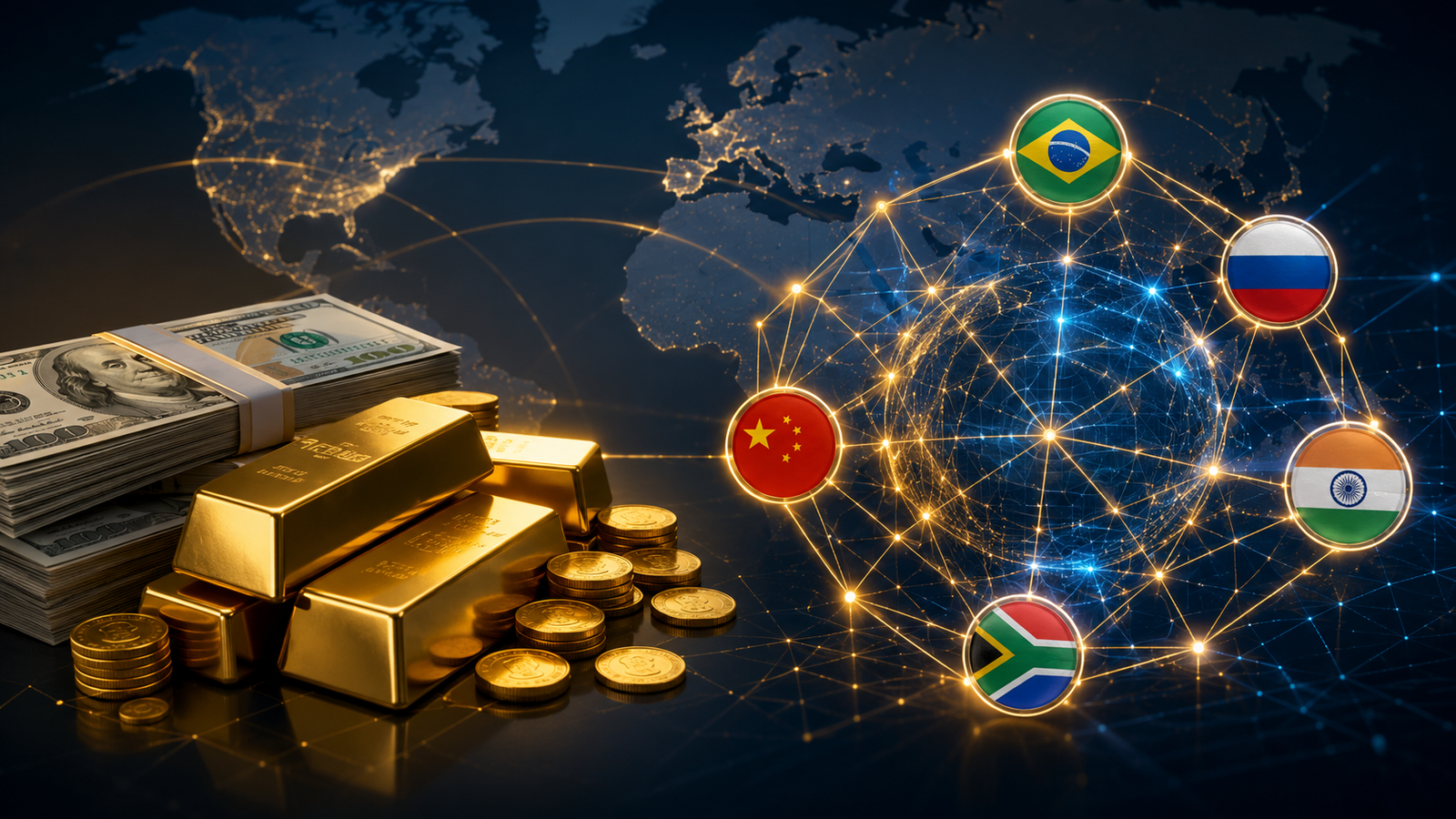
The closest thing to an actual “BRICS currency” is a concept known informally as the Unit — a proposed settlement token reportedly backed partly by gold and partly by a basket of member currencies, including the yuan, rupee, real, and ruble. It’s designed for trade settlement between governments and central banks, not for someone in Cape Town or São Paulo to withdraw from a cash machine. As of mid-2026, it remains a working concept discussed in technical committees, with no release date, no exchange rate, and no central bank standing behind it. Anyone telling you it “launches in 2026” is getting ahead of the actual record.
It helps to remember just how hard this kind of thing is to pull off. The Eurozone took decades of deliberate political and fiscal integration among neighboring, similarly sized economies to build a shared currency — and even then, each member had to give up independent monetary policy entirely. Asking Brazil, Russia, India, China, and South Africa — economies of wildly different sizes, inflation rates, and political systems, spread across four continents — to do something similar is a far bigger lift, and that’s before you even get to the fact that two of its largest members, China and India, are regional rivals.
BRICS Pay and mBridge: Infrastructure, Not Money
Then there’s BRICS Pay, a decentralized messaging system designed to link existing national payment networks — Russia’s SPFS, China’s CIPS, India’s UPI, and Brazil’s Pix — so member countries can settle trade directly in their own currencies instead of converting everything through the dollar first. Think of it less as a new currency and more as a new set of pipes connecting banks that don’t currently talk to each other easily. A related but separate project, mBridge, links central bank digital currencies from China, Thailand, Hong Kong, the UAE, and, since 2024, Saudi Arabia; by late 2025 it had processed several thousand transactions worth tens of billions of dollars. Useful for the banks and governments involved? Genuinely, yes. A new global currency? No — it’s closer to a bypass road around one specific tollbooth than a new highway system.
Both projects are aiming for a wider rollout around BRICS’s 2026 summit calendar, which is part of why the “2026 launch” rumor keeps circulating. What’s actually launching is payment infrastructure, not a currency anyone will hold.
Why BRICS Countries Want to Cut Their Dollar Dependence
It’s worth pausing on the why, because most articles jump straight to the what and miss the moment that actually kicked this into high gear: February 2022, when Western governments froze roughly $300 billion of Russia’s foreign currency reserves in response to the invasion of Ukraine.
That single event changed how a lot of finance ministries think about risk. If a government’s dollar and euro holdings can be frozen with the stroke of a pen, holding a large share of your national savings in someone else’s currency starts to look less like prudent reserve management and more like a strategic vulnerability. Central banks in China, India, Turkey, Poland, and beyond didn’t need to be at war with anyone to draw a similar conclusion — and gold, which nobody can freeze from outside a country’s own vaults, has been the biggest beneficiary. Central banks have bought more than 1,000 tonnes of gold a year in most years since 2022, roughly double the pre-2022 average, and gold now makes up a larger share of central bank reserves than US Treasuries for the first time since 1996, according to Morgan Stanley Research.
Add in the everyday friction of doing business — currency conversion costs, payment delays, and exposure to US sanctions policy toward countries like Iran or Russia — and it’s easy to see why oil producers, exporters, and central banks alike want more options. None of this requires a grand ideological plan to “kill the dollar.” Mostly, it’s large economies doing what any of us might do after watching someone else’s savings get frozen overnight: spreading the risk around.
How Far Has De-Dollarization Actually Gone?
This is the part almost every ranking article gets vague about, so let’s be specific.
The US dollar still shows up on one side of roughly 89% of all global foreign exchange trades, according to the Bank for International Settlements’ 2025 survey — essentially unchanged from a decade ago. Oil, gold, and most global commodities are still priced in dollars. When it comes to official reserves — the money central banks hold for a rainy day — the dollar accounted for about 56.9% of disclosed holdings in the third quarter of 2025, per IMF data. That’s the lowest share since 1994, worth noting, but it’s a gradual drift rather than a cliff: down from around 57% the previous quarter, and from roughly 70% back in 2000.
Here’s a quick snapshot of where things actually stand:
- US dollar’s share of official global reserves: around 57%, down from roughly 70% in 2000, drifting lower by about half a percentage point a year
- Dollar’s share of global FX trading: around 89%, barely moved in a decade
- Chinese yuan’s share of official reserves: under 2%, despite China being the world’s second-largest economy
- Gold’s share of central bank reserves: now larger than US Treasuries for the first time since 1996
- Share of Russia’s trade with BRICS partners settled outside the dollar: reportedly around 90% — though that figure is specific to Russia, not the bloc as a whole
That last point matters more than it might seem. Headlines often borrow Russia’s numbers and apply them to “BRICS” broadly, which overstates things considerably. Russia is a special case: it’s been locked out of dollar-based systems by sanctions, so it had little choice but to move fast. Other members are moving far more cautiously.
There are also practical limits nobody advertises. When India and Russia tried settling more of their oil trade in rupees, Russia reportedly ended up sitting on a pile of rupees it struggled to spend or convert, because India doesn’t import enough from Russia to balance the trade flow the other way. That’s the kind of friction a slogan like “de-dollarization” glosses over — swapping one currency for another only works smoothly when trade flows roughly both ways, and most bilateral trade doesn’t.

From Rio to New Delhi: Where BRICS Currency Plans Stand Right Now
BRICS now includes ten confirmed full members — Brazil, Russia, India, China, South Africa, Egypt, Ethiopia, Iran, the UAE, and Indonesia — plus roughly ten partner countries. Saudi Arabia’s status is genuinely murky: it appears on official BRICS materials, but as of mid-2026 it still hasn’t formally completed accession, seemingly keeping one foot in the room to preserve its relationship with Washington.
Brazil held the rotating presidency through 2025 and hosted the 17th summit in Rio de Janeiro that July. Notably, the resulting declaration committed to expanding local-currency trade but stopped short of naming de-dollarization as a formal, bloc-wide goal — a telling sign of how divided members remain on how hard to push this. India took over the presidency for 2026 and will host the 18th summit in New Delhi in September, with central bank digital currency interoperability and a fuller rollout of BRICS Pay on the agenda.
This is where the internal politics get genuinely interesting, because India has consistently played the role of brake pedal on the “anti-dollar” narrative. India’s government has said plainly that it has no policy to replace the dollar, and its central bank has described de-dollarization, for India’s own purposes, as simple “derisking” rather than any kind of confrontation with Washington. China and Russia, by contrast, have pushed harder and faster: China favors accelerating yuan internationalization, while India prefers building around its own digital rupee. That’s not a minor scheduling disagreement — it’s a structural reason a single BRICS currency is unlikely while China and India remain, in practice, regional rivals with an unresolved border dispute between them.
Then there’s the Trump factor. Since November 2024, Donald Trump has repeatedly threatened 100% tariffs on any BRICS country that creates or backs a currency meant to replace the dollar, and reiterated broader tariff threats aimed at “BRICS-aligned” countries through 2025. Whatever you make of that strategy, it’s worth noting that several BRICS governments, including South Africa and India, publicly denied currency-replacement plans within days of the original threat — which says something about how much appetite there actually is, even inside the bloc, for a currency fight with the world’s largest consumer market.
Will the Dollar Actually Lose Its Top Spot? What Experts — and History — Say
Ask around and you’ll get a fairly consistent answer from mainstream economists: no, not soon, and probably not to BRICS specifically. Jim O’Neill, the economist who coined the term “BRIC” back in 2001, has said plainly that he doesn’t see a common BRICS currency ever seriously challenging the dollar, even while acknowledging that alternative payment “rails” for settling trade could keep expanding. Analysts at the Peterson Institute have made similar points. The capital markets of BRICS members simply aren’t deep, liquid, or trusted enough yet to absorb the kind of global demand the dollar currently handles, and building that kind of trust has historically taken decades, not summit cycles.
Crypto is often floated as the beneficiary if the dollar wobbles, and some BRICS-adjacent coverage leans hard into that idea, partly because it’s good for business if you happen to sell crypto. But Bitcoin and similar assets face their own real obstacles as a reserve asset — price swings far too large for a central bank’s comfort, scaling limits, and heavy energy use — which is a big part of why central banks have overwhelmingly chosen gold, not crypto, as their actual hedge of choice.
There’s a useful historical comparison here that gets left out of almost every other article on this topic: the British pound. A century ago, sterling was the world’s dominant reserve currency, the way the dollar is today. It didn’t collapse overnight. The pound’s decline played out over roughly three decades, accelerated by two world wars, a string of currency crises, and the slow rise of an alternative — the dollar — that markets came to trust more. Today the pound represents under 5% of global reserves. If the dollar ever loses its throne, most economists expect something similar: a long, uneven slide measured in decades, not a single dramatic event triggered by one summit or one new payment system. That’s useful context for calibrating how urgently to react to any of this. Based on how these transitions have gone historically, the honest answer is: not very.
What This Means for You in the US, UK, or Australia
Here’s the part most competing articles skip entirely, even though it’s more useful than another paragraph about gold-backed baskets.
If you’re in the United States, the direct effect of BRICS currency plans on your day-to-day finances right now is close to zero. What is affecting the dollar’s value in 2026, in a separate story that keeps getting tangled up with the BRICS one, is a mix of Federal Reserve rate cuts, US trade policy, and federal deficit concerns, all of which have pulled the dollar index down from highs above 110 to around 100–101 over the past year or so. A softer dollar makes imported goods and overseas travel a bit pricier, while it helps US exporters and quietly reduces the real burden of existing fixed-rate debt, since you’re paying it back in dollars worth a little less. That’s a real, near-term effect. It just isn’t the BRICS story people think it is.
If you’re in the UK, you’re watching this from a country that has actually lived through exactly this kind of transition before, from the other side of it. The Bank of England, like most central banks, already holds a diversified reserve mix, and sterling’s own history — from dominant reserve currency to under 5% of global reserves — is arguably the best real-world guide available for how seriously to take “the dollar is doomed” headlines: seriously, as a long-term trend, but not as next quarter’s emergency.
If you’re in Australia, there’s an extra wrinkle worth knowing. China is Australia’s largest trading partner by a wide margin, so any genuine shift toward yuan-based trade settlement across the Asia-Pacific region would touch Australian exporters more directly than it would touch someone in Ohio or Yorkshire. The Reserve Bank of Australia already diversifies its own reserves across multiple currencies and gold for exactly this kind of reason.
A few practical, non-dramatic takeaways apply across all three countries. Resist the urge to restructure your savings or investments on the strength of a single “BRICS currency” headline — the underlying developments move on a timescale of years to decades, not weeks. If you’re genuinely concerned about your own dollar exposure, that’s a conversation worth having with a licensed financial advisor who can look at your actual situation, rather than something to act on from any one article, including this one.
It also helps to know where to look for real signal instead of noise. IMF reserve-composition reports and BIS trading surveys are public, updated regularly, and free of any incentive to make the story sound more dramatic than it is, which is more than can be said for a lot of the sites currently ranking on this topic. And if you want the one part of this story that’s already tangible rather than theoretical, it’s gold: record central bank buying and record prices are the clearest real-world sign of this trend in motion, whether or not the word “BRICS” ever comes up again.
Mistakes People Make When Reading BRICS-Dollar Headlines
A few patterns show up constantly in comment sections and forwarded messages, and they’re worth naming directly.
The first is treating BRICS Pay or mBridge as though they’re the same thing as a new currency. They’re payment infrastructure — useful, real, and worth watching, but categorically different from a currency with its own value, central bank, and exchange rate.
The second is assuming a weaker dollar, a real and measurable short-term market move, is the same thing as the dollar losing its reserve-currency status, a much slower and more structural shift. Those two ideas get discussed in the same breath constantly, and they aren’t the same phenomenon, even though they can happen at the same time.
The third is taking investment cues from sources with an obvious financial stake in the story sounding urgent. Gold dealers and crypto platforms both do better when people believe a dollar collapse is imminent, and a fair amount of “BRICS currency” content online is written for exactly that audience.
The fourth is ignoring what BRICS members themselves keep saying. When India’s government, South Africa’s government, and the New Development Bank’s own leadership all state, on the record, that there’s no active plan for a common currency, that isn’t spin. It’s the most direct evidence available about where this is actually headed in the near term.
The Bottom Line
BRICS currency plans are real, but they’re narrower and slower than most headlines suggest. What’s genuinely happening is a gradual build-out of payment systems and local-currency trade arrangements, led mainly by Russia and China, that is chipping away, slowly, at a dollar dominance that remains, for now, overwhelming: roughly 89% of global currency trading and 57% of official reserves. A single BRICS currency capable of replacing the dollar isn’t close to happening, isn’t scheduled, and runs into the same problem it always has — the bloc’s biggest members don’t fully agree that they want it.
The practical takeaway is simple. Watch the real indicators — reserve-composition data, gold purchases, and what actually comes out of the New Delhi summit in September — rather than reacting to any single dramatic headline. The dollar’s position is shifting, but on a timeline measured in decades, much like the pound’s was. That gives you time to make informed decisions instead of rushed ones.
Frequently Asked Questions
Is BRICS actually creating a new currency to replace the US dollar?
Not in the way most headlines imply. There’s an early-stage concept called the Unit, discussed as a possible gold- and currency-basket-backed settlement token for trade between governments, but it has no launch date, no central bank behind it, and no firm agreement among BRICS members to actually build it. What’s further along is payment infrastructure that lets countries trade in their own currencies, which is a different and far less dramatic thing than a new global currency.
What’s the difference between BRICS Pay and a BRICS currency?
BRICS Pay is a payment messaging system connecting existing national networks, such as India’s UPI and China’s CIPS, so trade can be settled directly in local currencies instead of being converted through the dollar first. It doesn’t create any new money; it’s closer to plumbing that lets existing currencies move more easily between specific countries. A BRICS currency, if it ever existed, would be an entirely new unit of value. Right now, only the plumbing is actually being built.
Will the US dollar collapse because of BRICS?
Almost no mainstream economist expects that outcome, and the data doesn’t support it either. The dollar remains dominant in global trade, reserves, and commodity pricing by a wide margin. What’s more likely, based on both current numbers and historical precedent like the British pound’s long decline, is a slow, multi-decade erosion of dollar dominance rather than a sudden collapse tied to a BRICS announcement.
How would de-dollarization actually affect someone in the US, UK, or Australia?
Right now, the direct effect is minimal for most people. The dollar’s day-to-day value is shaped far more by Federal Reserve policy, US trade decisions, and government deficits than by anything BRICS is doing. Over a longer horizon, if dollar dominance keeps eroding gradually, it would likely show up first in central bank reserve strategy and gold prices, and only much later, if at all, in everyday costs like imports or travel.
Did Trump’s tariff threats stop BRICS from de-dollarizing?
It’s hard to prove direct cause and effect, but the timing is notable. Several BRICS governments publicly distanced themselves from “common currency” talk within days of the initial 2024 tariff threat, and by 2025 the bloc’s official language had shifted toward “local-currency trade” rather than anything framed as replacing the dollar. Whether that reflects the tariff threat working as intended, internal disagreements that already existed, or both, is genuinely debated among analysts.