







As Americans prepare to fire up their grills for the Fourth of July, they’re facing some of the highest beef prices on record.
Yet despite the sticker shock, demand for beef and steak are holding up.
Beef prices have surged after the U.S. cattle herd shrank to its smallest size in decades following years of drought, high feed costs and herd liquidation. The resulting supply crunch has driven up cattle prices and, ultimately, the cost of beef at grocery stores and on restaurant menus.
Cattle are herded in a stable on June 05, 2026 in Hamilton, Texas.
Brandon Bell | Getty Images
While prices eased slightly in May after reaching record highs in the spring, consumers are still paying near-record prices for ground beef and steaks. The average price of ground beef was $6.75 per pound in May, according to U.S. Bureau of Labor Statistics data, up nearly 13% from a year ago and just below April’s record high of $6.90. Beef steak prices averaged $12.80 per pound, up 16% from a year earlier and the second-highest level on record.
But so far, shoppers don’t appear willing to abandon their summer grilling traditions. The resilience offers another clue into consumer behavior at a time when investors are closely watching for signs of whether and where high prices are causing shoppers to pull back.
“We are seeing customer demand for steaks remain quite high, with a shift towards more premium and organic options,” a Kroger spokesperson told CNBC. “We’ve also seen beef continue to be a preferred choice during recent holidays, including Easter and Memorial Day.“
Beef has generated the largest dollar growth of any food category ahead of Independence Day, with sales rising roughly $352 million compared to last year, according to data from NielsenIQ.
“Consumers are entering the holiday with discipline, making more trips but with clear intent behind each one,” the consumer research firm said in a June report.
Steak and quality win
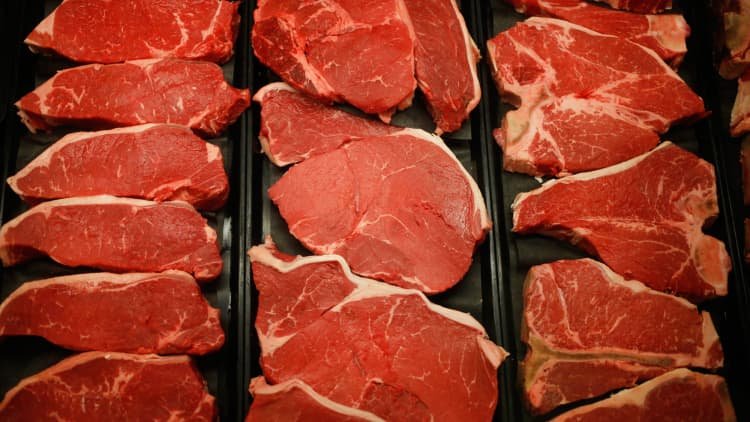
Cuts of beef are displayed at Handy Market on May 14, 2026 in Burbank, California.
Justin Sullivan | Getty Images
As demand for beef holds up, consumers have shown clear preferences within the segment.
NielsenIQ said consumers increasingly view steak as the centerpiece of special occasions: an “affordable luxury” where they’re willing to pay more for quality and the experience, while finding savings elsewhere when they shop for groceries.
The data also suggest consumers aren’t simply searching for the cheapest protein. Instead, many are placing a greater emphasis on quality.
Shoppers reported increasing favor toward quality claims such as USDA Prime (42%), no added hormones (40%), grass-fed (37%), and no antibiotics ever (36%) when purchasing meat, according to NielsenIQ.
“Shoppers are looking past the label and into the story behind the meat,” the firm said. “Claims tied to quality and sourcing are gaining ground as buyers seek confidence.”
The demand has also benefited others in the industry, like Omaha Steaks, which told CNBC that consumers continue to prioritize gifting steaks even as they cut back elsewhere.
“Customers are still celebrating dad with premium proteins, but they’re also being thoughtful about value and versatility,” said Nate Rempe, president and CEO of Omaha Steaks last month as Father’s Day approached.
The company said it has seen continued growth in its USDA certified tender top sirloin filet, a recently introduced value cut, with sales up 25% in the weeks heading into Father’s Day this year compared to 2025.
Restaurants have also reported seeing benefits from the dynamic. LongHorn Steakhouse, among others, has seen a rise in diners seeking out steaks.
“The guests know they’re getting high quality steaks when they come to LongHorn [Steakhouse],” said Rick Cardenas, CEO of the chain’s parent company Darden Restaurants. “They get a great value. And it doesn’t hurt that there’s a high beef inflation in the market. And so the relative value looks a little bit better.”
The key question for investors is how long the dynamic can last. Rebuilding the U.S. cattle herd could eventually increase beef supplies and ease prices, but that process takes years without the aid of imported supply.