









NEWYou can now listen to Fox News articles!
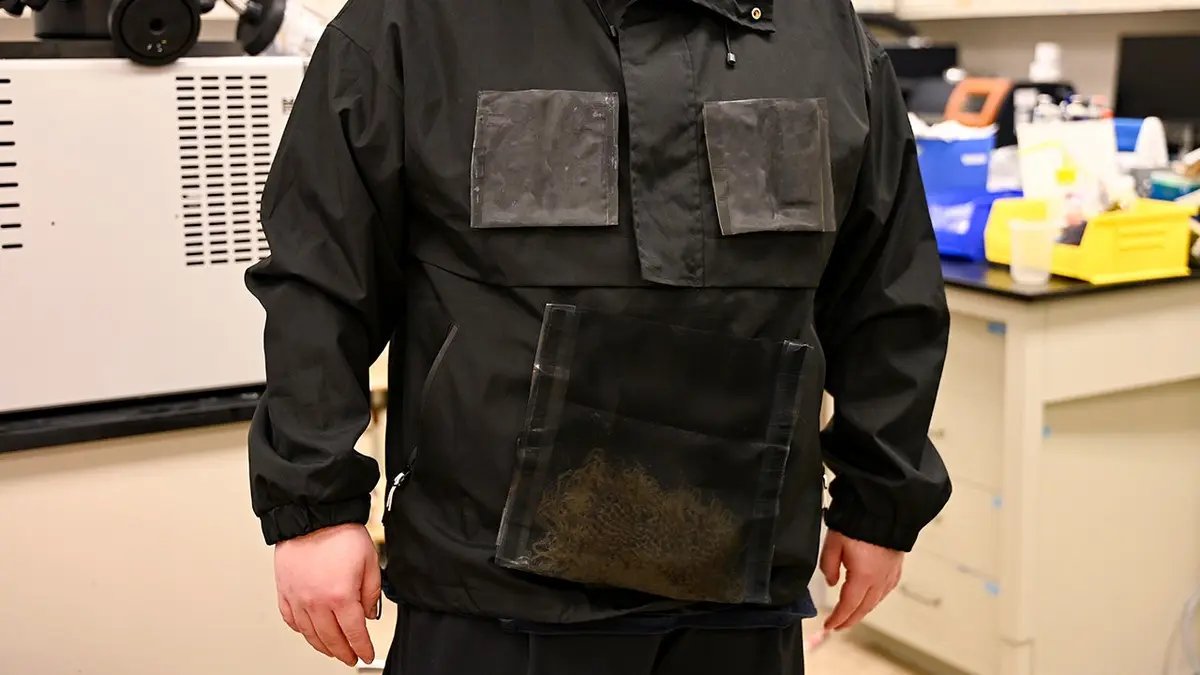
Engineers have developed a jacket capable of converting water vapor from the air into drinking water.
A team of University of Texas engineers developed the jacket as part of their broader invention, AirGel, a technology that uses hydrogel material and solar energy.
“Water scarcity threatens two-thirds of the global population, underscoring the urgent need for sustainable and accessible clean water solutions,” the researchers wrote in a Science Advances report on their development of a field‑portable, solar‑powered, water-harvesting device.
CAN ALKALINE WATER ACTUALLY IMPROVE YOUR HEALTH? EXPERTS SEPARATE FACT FROM FICTION
“AirGel provides a complementary solution to existing water-processing systems,” said Yaxuan Zhao, one of the UT researchers who developed the technology, in a UT press release. “It can produce water using only air and sunlight, and it can deliver water directly to the point of need.”
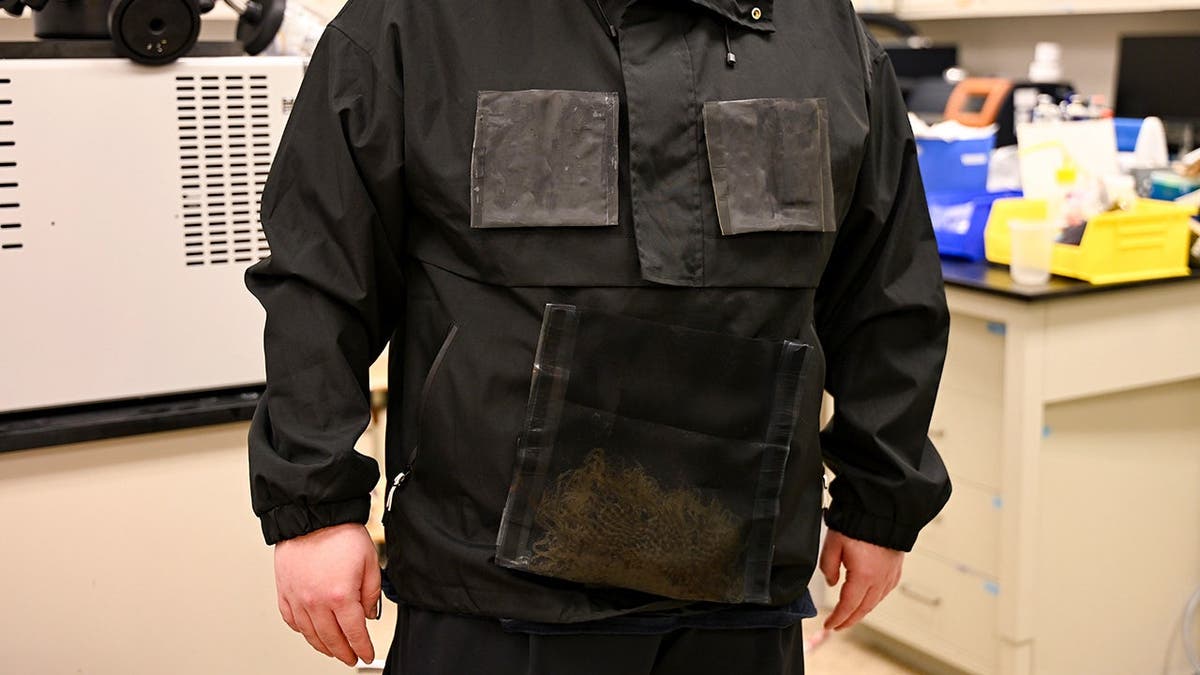
A team of University of Texas at Austin engineers developed this jacket to extract drinking water from humidity in the air. (University of Texas at Austin)
“This differs from a centralized system that might need to transport water a long distance, which can increase the cost and the energy demand,” he went on.
“Since our system is portable, modular and only relies on solar energy, it can be used in many applications, such as outdoor activities, for household or community needs, and even disaster relief.”
TEST YOURSELF WITH OUR LATEST LIFESTYLE QUIZ
The wearable prototype could be valuable to soldiers, emergency responders and others who spend time in remote outdoor environments, the researchers said.
The jacket produced about 14 to 30 ounces of water, depending on humidity levels.
“The fabric absorbs moisture from the air, then releases it when heated by sunlight, so the water can be condensed and collected,” stated the news release.
In testing, the wearable prototype jacket proved to be a much less bulky, more efficient and portable method of harvesting water compared to conventional materials, which often involve a box or panel, according to researchers.
CLICK HERE TO SIGN UP FOR OUR LIFESTYLE NEWSLETTER
The jacket produced about 14 to 30 ounces of water, depending on humidity levels, which amounts to between a threefold and 10-fold improvement in performance compared to other materials, the release said.

The material used in a new water-harvesting jacket, pictured here, absorbs moisture from the air, releases it when heated by the sun, then condenses and collects the water. (University of Texas at Austin)
The research team used the same technology in a separate device, which pulled “a record amount of drinking water from the air in the hot, arid climate of the Chihuahuan Desert of New Mexico and the more humid environment of Austin,” the news release said.
“The important advance here is that the team did not simply make another material that absorbs water,” Keith Johnston, co-author and chair professor of the Cockrell School of Engineering’s McKetta Department of Chemical Engineering, said in a statement.
CLICK HERE TO DOWNLOAD THE FOX NEWS APP
“They designed a pathway for water to move quickly, from vapor in the air, to liquid on the fiber surface and then into the textile. That transport design is what allows the material to work not just in a small lab test, but in a wearable system.”
UT’s research commercialization unit, Discovery to Impact, has a patent pending on this technology, and is considering using it in other forms of outdoor gear, such as tents, and for various other applications.

Hikers, campers and other outdoor enthusiasts may benefit from new technology that uses a special textile to produce drinking water. (iStock)
Zhao and fellow graduate researcher Weixin Guan won international innovation awards for the AirGel technology, which received a Patent Acceleration Certificate from the U.S. Patent and Trademark Office, UT reported.
TEST YOURSELF WITH OUR LATEST LIFESTYLE QUIZ
“[We] hope to send AirGel to places globally that need water most, where we can further study their field performance and cost-effectiveness to bring AirGel one step closer to practical implementation,” Guan said.